Buying near East Bay open space can provide beautiful views and trail access, but the property deserves additional investigation before you make an offer.Homes near ridgelines, regional parks,,

Dated: August 28 2026
Views: 8
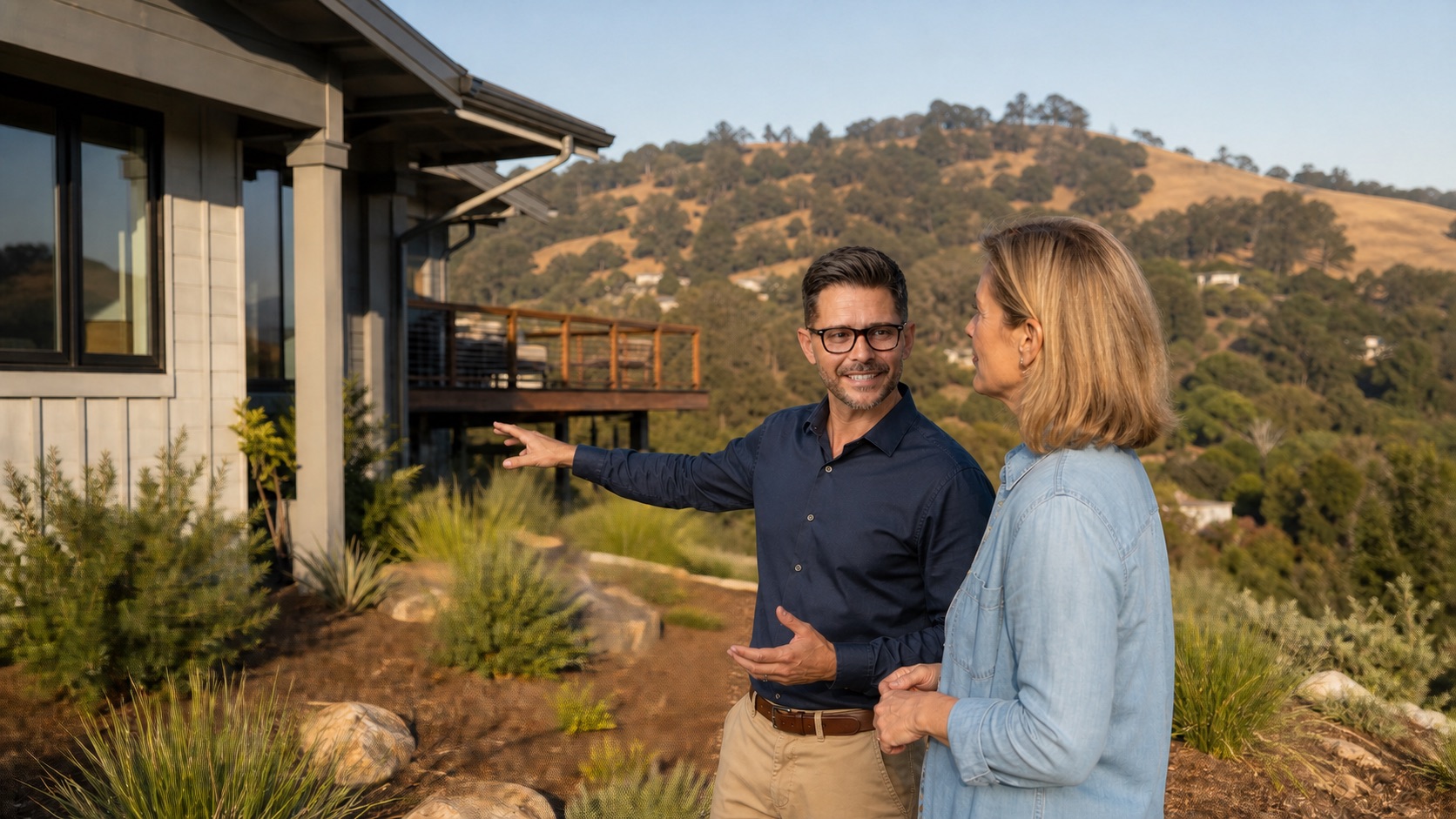
East Bay homeowners can reduce wildfire vulnerability by combining defensible space, home hardening, and planning ahead.
Late summer is a practical time to look at the property as a system. Vegetation, roofs, gutters, vents, decks, fences, stored materials, access, and insurance can all influence how well a home is prepared for wildfire.
No improvement can eliminate wildfire risk. The purpose of preparation is to reduce avoidable ignition pathways, improve the home's resistance to embers and radiant heat, and make it easier for residents and emergency personnel to respond.
CAL FIRE describes home hardening and defensible space as complementary strategies. One addresses the structure. The other changes the conditions around it.
The area immediately next to the home deserves close attention because embers can collect against walls, under decks, near doors, and in corners.
Remove dry leaves, needles, weeds, and other debris from the roof, gutters, deck, porch, stairs, and the base of exterior walls. Move firewood, lumber, cardboard, spare furniture, and other combustible storage away from the structure.
Consider whether bark mulch, combustible fencing, gates, planters, or outdoor furniture create a continuous path toward the home. CAL FIRE recommends hardscape materials such as gravel, pavers, or concrete in the area closest to structures.
Requirements can vary by location and continue to evolve. Homeowners should confirm current rules with their local fire authority and review CAL FIRE's defensible space guidance.
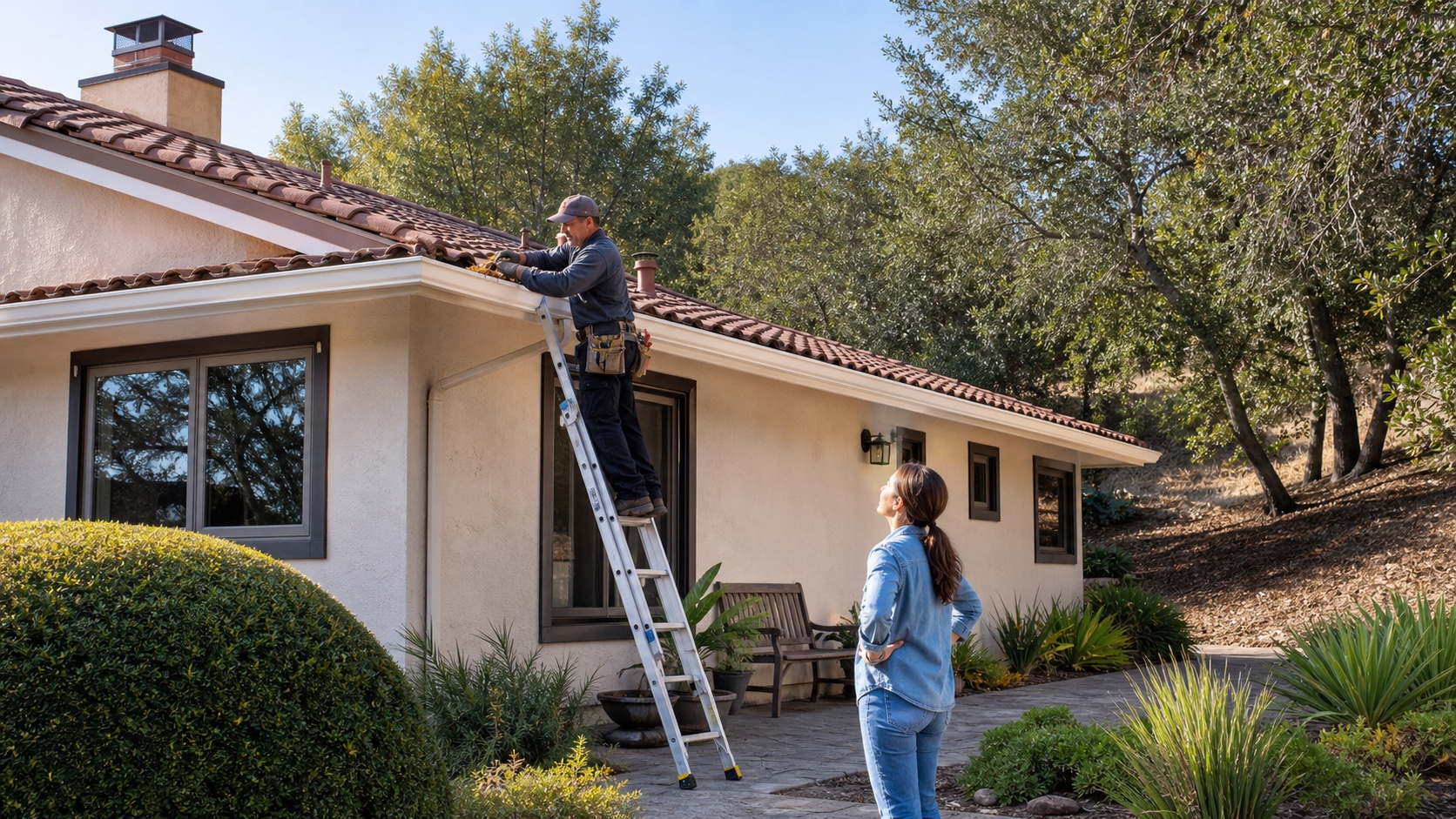
A roof may be made from a fire-resistant material while still collecting combustible debris. Leaves and needles can accumulate in gutters, roof valleys, behind skylights, and where different roof sections meet.
Inspect these areas regularly, especially after wind. Repair damaged roofing and flashing, keep branches away from the roof and chimney, and make sure gutters and downspouts remain secure.
If roof access is unsafe, use an appropriate professional. Wildfire preparation should not create a fall hazard.
Wind-driven embers can reach a property before flames do. Check vents, eaves, soffits, roof edges, siding gaps, weather stripping, garage doors, windows, and other openings.
Damaged screens, missing covers, gaps around utilities, and deteriorated exterior materials may create entry points. A qualified contractor can help determine whether vents, windows, siding, decks, or other components should be repaired or upgraded.
Use approved products and verify local building requirements before modifying ventilation or structural components. CAL FIRE's home-hardening resources provide a useful starting point.
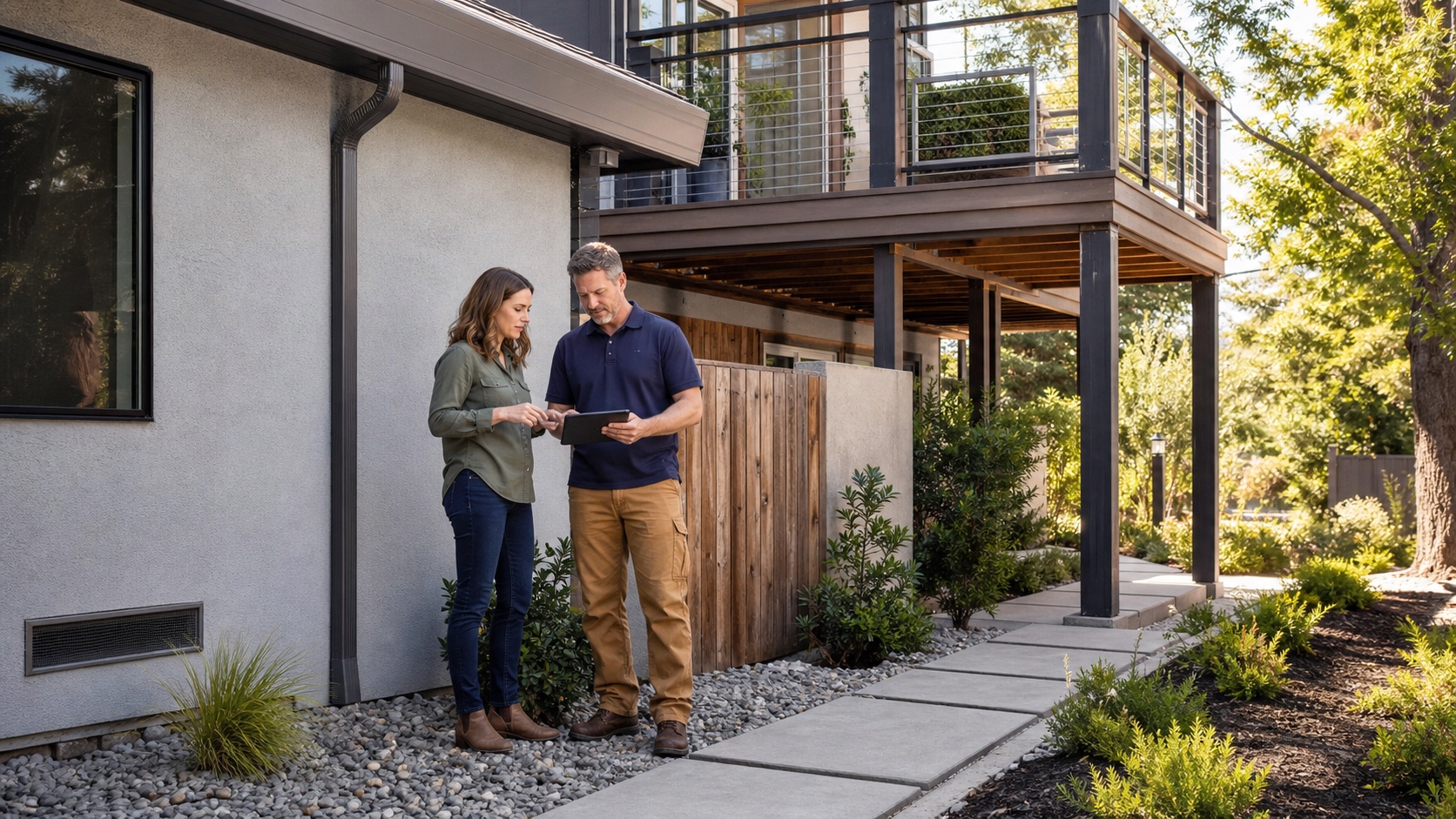
Defensible space is not the same as removing every plant. The goal is to reduce dead fuel, interrupt fire pathways, and maintain spacing appropriate to the property's slope, vegetation, and exposure.
Remove dead and dying plants, dry grass, fallen branches, and accumulated debris. Prune trees and shrubs so vegetation does not create continuous layers from the ground into larger tree canopies.
Pay attention to narrow side yards, areas beneath decks, fence lines, slopes below the home, and vegetation near accessory structures. A condition that appears minor on level ground may behave differently on a steep slope.
Work with a qualified tree professional when branches are large, close to utilities, or difficult to reach. Follow local rules for vegetation removal and disposal.
Fences, gates, arbors, decks, sheds, and stored materials can connect an ignition source to the house. Examine where these features touch the structure and where debris accumulates around them.
Clear combustible storage from beneath decks. Replace damaged deck boards. Evaluate whether the section of a combustible fence attached directly to the home could be changed to a noncombustible alternative.
Accessory structures also matter. A shed full of fuel, cardboard, paint, or dry landscaping materials may create a separate exposure if it sits close to the residence.
Confirm that the address is visible from the street in daylight and at night. Keep driveways, gates, and access routes clear enough for the vehicles that may need to use them.
Know how gates operate during a power outage. Avoid blocking hydrants, shared access, turnarounds, or evacuation routes. If the property uses a private road, coordinate with neighbors rather than assuming another person has addressed vegetation or clearance.
Residents should also know more than one route out of the neighborhood when alternatives exist.
Do not wait for an active fire or renewal deadline to understand the policy. Review dwelling limits, other structures, personal property, additional living expense coverage, deductibles, exclusions, and documentation requirements with a licensed insurance professional.
Ask the carrier or broker how mitigation work should be documented and whether available discounts apply. The California Department of Insurance says actions in its Safer from Wildfires framework can qualify policyholders for insurance discounts, although the amount depends on the insurer, property, and completed work.
Photograph the home's exterior and improvements. Keep receipts, inspection records, contractor invoices, and product information in a location that can be accessed away from the property.
A current home inventory can make an insurance claim easier to document. Photograph or record each room, closets, storage areas, the garage, and significant exterior features.
Record model numbers, serial numbers, receipts, appraisals, and other supporting information for valuable items when appropriate. Store a copy securely off-site or in protected cloud storage.
Update the inventory after major purchases or renovations.
Property work is only one part of preparation. Decide how the household will receive alerts, communicate, evacuate, assist children or older adults, transport pets, and handle medications or mobility needs.
Keep vehicles fueled or charged, maintain accessible go-bags, and agree on an out-of-area contact. Follow evacuation instructions from public safety officials and leave promptly when directed.
Mike White's property review approach is to work from the structure outward: first remove immediate ignition paths, then address building vulnerabilities, vegetation, access, documentation, insurance, and the household plan.
Wildfire preparation can help a future buyer understand how the property has been maintained. Preserve records for roof work, vents, decks, vegetation management, inspections, and other mitigation improvements.
Fire hazard designations and defensible space requirements can affect a real estate transaction. Sellers should verify the rules that apply to the property's location before listing rather than relying on assumptions from another city or neighborhood.
A flat suburban lot, a wooded hillside home, and a townhouse next to open space will not have the same priorities. Use official guidance, local requirements, and qualified professionals to build a property-specific plan.
If you are buying, selling, or evaluating an East Bay home, I can help you identify the property features and documentation that deserve closer review and connect those findings to your real estate strategy.
Mike White, Realtor
DRE# 02209144
REMAX Accord

Real estate is personal. It’s not just about finding a house or selling a property. It’s about how people live, what matters most and where they want to go next. I’m Mike White, a Lifestyle Real....
Buying near East Bay open space can provide beautiful views and trail access, but the property deserves additional investigation before you make an offer.Homes near ridgelines, regional parks,,
Early fall can create a useful East Bay real estate window for buyers and sellers who understand how September changes the market.The first week of September does not suddenly transform East Bay
East Bay homeowners can reduce wildfire vulnerability by combining defensible space, home hardening, and planning ahead.Late summer is a practical time to look at the property as a system.,
East Bay sellers can protect their time and equity by repairing the correct problems before the home reaches the market.Preparing a home for sale does not mean fixing everything. The better goal is
 Last updated: September 20, 2026 11:08 PM UTC Property Information © 2026 MLSListings Inc. All rights reserved. Listing information is deemed reliable but not guaranteed. The data relating to real estate for sale on this display comes in part from the Internet Data Exchange program of the MLSListingsTM MLS system. Real estate listings held by brokerage firms other than REMAX Accord are marked with the Internet Data Exchange and detailed information about
them includes the names of the listing brokers and listing agents.
The information being provided by CARETS (CLAW, CRISNet MLS, DAMLS, CRMLS, i-Tech MLS, and/or VCRDS)
is for the visitor's personal, non-commercial use and may not be used for any purpose other than to identify
prospective properties visitor may be interested in purchasing.
Any information relating to a property referenced on this web site comes from the Internet Data Exchange (IDX)
program of CARETS. This web site may reference real estate listing(s) held by a brokerage firm other than the
broker and/or agent who owns this web site.
The accuracy of all information, regardless of source, including but not limited to square footages and lot sizes, is
deemed reliable but not guaranteed and should be personally verified through personal inspection by and/or with
the appropriate professionals. The data contained herein is copyrighted by CARETS, CLAW, CRISNet MLS,
DAMLS, CRMLS, i-Tech MLS and/or VCRDS and is protected by all applicable copyright laws. Any dissemination
of this information is in violation of copyright laws and is strictly prohibited.
CARETS, California Real Estate Technology Services, is a consolidated MLS property listing data feed comprised
of CLAW (Combined LA/Westside MLS), CRISNet MLS (Southland Regional AOR), DAMLS (Desert Area MLS),
CRMLS (California Regional MLS), i-Tech MLS (Glendale AOR/Pasadena Foothills AOR) and VCRDS (Ventura
County Regional Data Share)
Show More...
Last updated: September 20, 2026 11:08 PM UTC Property Information © 2026 MLSListings Inc. All rights reserved. Listing information is deemed reliable but not guaranteed. The data relating to real estate for sale on this display comes in part from the Internet Data Exchange program of the MLSListingsTM MLS system. Real estate listings held by brokerage firms other than REMAX Accord are marked with the Internet Data Exchange and detailed information about
them includes the names of the listing brokers and listing agents.
The information being provided by CARETS (CLAW, CRISNet MLS, DAMLS, CRMLS, i-Tech MLS, and/or VCRDS)
is for the visitor's personal, non-commercial use and may not be used for any purpose other than to identify
prospective properties visitor may be interested in purchasing.
Any information relating to a property referenced on this web site comes from the Internet Data Exchange (IDX)
program of CARETS. This web site may reference real estate listing(s) held by a brokerage firm other than the
broker and/or agent who owns this web site.
The accuracy of all information, regardless of source, including but not limited to square footages and lot sizes, is
deemed reliable but not guaranteed and should be personally verified through personal inspection by and/or with
the appropriate professionals. The data contained herein is copyrighted by CARETS, CLAW, CRISNet MLS,
DAMLS, CRMLS, i-Tech MLS and/or VCRDS and is protected by all applicable copyright laws. Any dissemination
of this information is in violation of copyright laws and is strictly prohibited.
CARETS, California Real Estate Technology Services, is a consolidated MLS property listing data feed comprised
of CLAW (Combined LA/Westside MLS), CRISNet MLS (Southland Regional AOR), DAMLS (Desert Area MLS),
CRMLS (California Regional MLS), i-Tech MLS (Glendale AOR/Pasadena Foothills AOR) and VCRDS (Ventura
County Regional Data Share)
Show More...
 All measurements and all calculations of area are approximate. Information provided by Seller/Other sources, not verified by Broker. All interested persons should independently verify accuracy of information. Provided properties may or may not be listed by the office/agent presenting the information. Data maintained by MetroList© may not reflect all real estate activity in the market.
All real estate content on this site is subject to the Federal Fair Housing Act of 1968, as amended, which makes it illegal to advertise any preference, limitation or discrimination because of race, color, religion, sex, handicap, family status or national origin or an intention to make any such preference, limitation or discrimination.
MetroList CA data last updated: September 20, 2026 10:38 PM UTC Terms of Use.
Vendor data provided by Inside Real Estate, LLC.
All measurements and all calculations of area are approximate. Information provided by Seller/Other sources, not verified by Broker. All interested persons should independently verify accuracy of information. Provided properties may or may not be listed by the office/agent presenting the information. Data maintained by MetroList© may not reflect all real estate activity in the market.
All real estate content on this site is subject to the Federal Fair Housing Act of 1968, as amended, which makes it illegal to advertise any preference, limitation or discrimination because of race, color, religion, sex, handicap, family status or national origin or an intention to make any such preference, limitation or discrimination.
MetroList CA data last updated: September 20, 2026 10:38 PM UTC Terms of Use.
Vendor data provided by Inside Real Estate, LLC.
 Bay East ©2026. CCAR ©2026. bridgeMLS ©2026. Information Deemed Reliable But Not Guaranteed. This information is being provided by the Bay East MLS, or CCAR MLS, or bridgeMLS. The listings presented here may or may not be listed by the Broker/Agent operating this website. This information is intended for the personal use of consumers and may not be used for any purpose other than to identify prospective properties consumers may be interested in purchasing. Data last updated at September
20, 2026 11:14 PM UTC
Show More...
Bay East ©2026. CCAR ©2026. bridgeMLS ©2026. Information Deemed Reliable But Not Guaranteed. This information is being provided by the Bay East MLS, or CCAR MLS, or bridgeMLS. The listings presented here may or may not be listed by the Broker/Agent operating this website. This information is intended for the personal use of consumers and may not be used for any purpose other than to identify prospective properties consumers may be interested in purchasing. Data last updated at September
20, 2026 11:14 PM UTC
Show More...
 This information, including square footage, while not guaranteed, has been acquired from sources believed to be reliable. Listings on this page identified as belonging to another listing firm are based upon data obtained from the SFAR MLS, which data is copyrighted by the San Francisco Association of REALTORS©, but is not warranted.
