Buying near East Bay open space can provide beautiful views and trail access, but the property deserves additional investigation before you make an offer.Homes near ridgelines, regional parks,,

Dated: June 12 2026
Views: 4

Pricing a home would be simple if every nearby property were identical.
In reality, one comparable sale may be beautifully updated but located on a busy road. Another may have the right floor plan but a smaller yard. A third may have closed six months ago under different market conditions. Their sale prices may point in different directions even though all three appear relevant.
This is common across the East Bay, where housing can vary significantly from one street—or one lot—to the next.
The goal is not to find a single comparable that proves what you want the home to be worth. It is to interpret the complete set of available evidence and determine where the property is most likely to compete in the current market.
Sellers sometimes expect comparable sales to function like exact matches. A nearby home sold for a certain price, so their property should sell for the same amount—or more.
That conclusion may overlook important differences.
A useful comparable helps explain how buyers have valued properties with similar characteristics. It does not eliminate the need to account for location, condition, size, lot utility, views, floor plan and timing.
The strongest comparable is not always the closest sale. A home two blocks away may be substantially different in design or condition, while a property farther away may compete for the same buyers because it offers a more similar experience.
Comparable sales should be evaluated for relevance, not merely distance.
Square footage and bedroom count are important, but buyers do not purchase statistics. They purchase the way a home lives.
Two properties with similar measurements may feel very different. One may have an open kitchen connected to the main living area, while the other has a more segmented layout. One may offer level indoor-outdoor access, while the other requires stairs to reach the yard.
When evaluating comparable sales, consider the experience each home offers:
Overall condition and presentation
Floor-plan functionality
Natural light
Bedroom and bathroom placement
Lot usability
Privacy
Parking and storage
Street influence
Views and outdoor spaces
Proximity to amenities and transportation
The most useful sales are usually those that would have attracted a similar group of buyers.
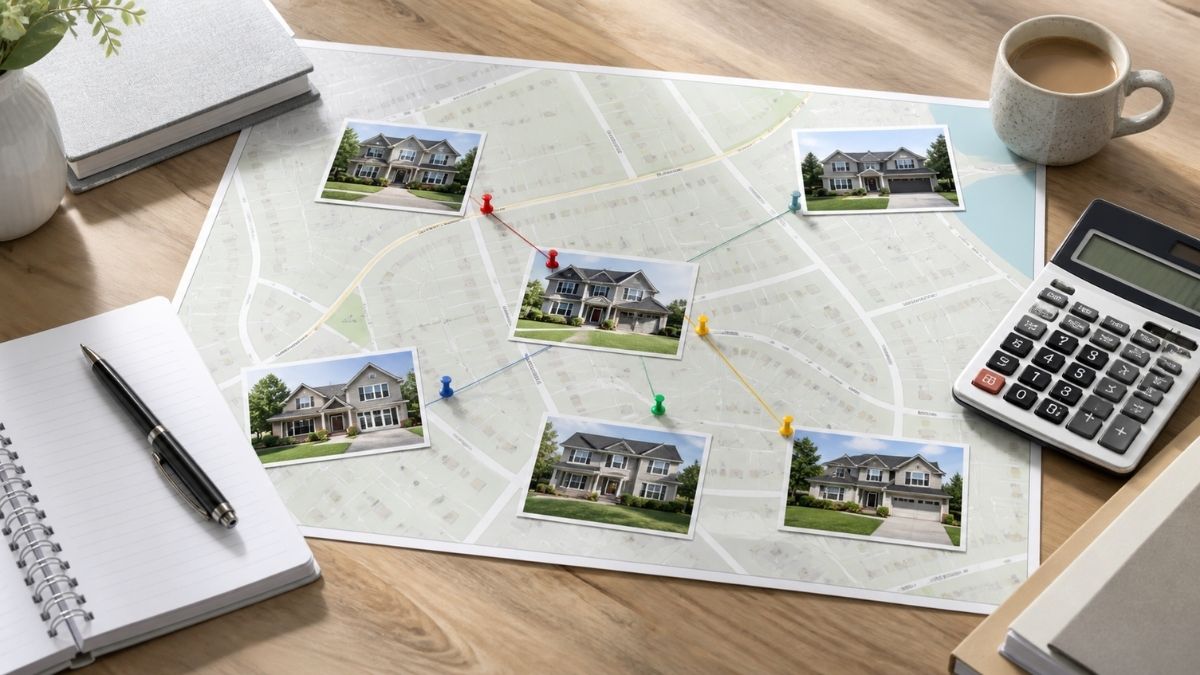
“Updated” is not a precise category.
A home with new paint and flooring is not necessarily comparable to one with recently renovated kitchens, bathrooms, systems and landscaping. Buyers may also respond differently to the quality and consistency of the work.
At the same time, sellers should be careful not to assume that every dollar spent on improvements will be returned in the sale price. Renovations can improve marketability and value, but the result depends on design, execution, buyer demand and whether the improvement is appropriate for the neighborhood.
When comparable sales disagree, place them along a condition spectrum:
Fully renovated and professionally presented
Updated in the most visible areas
Well maintained but cosmetically dated
In need of repairs or substantial modernization
Then consider where the subject property fits. If it falls between two categories, the likely value may also fall between the corresponding sales.
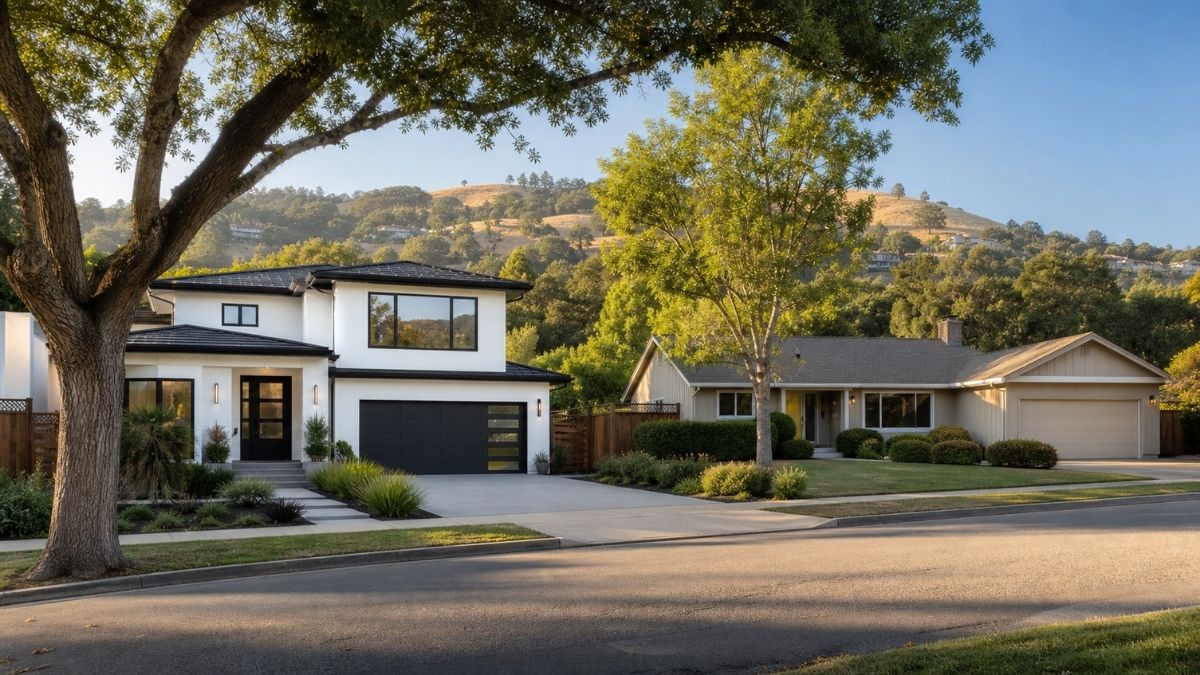
A larger lot does not automatically command a proportionally higher price.
Buyers care about how the land can be used. A smaller, level backyard with direct access from the living area may appeal more than a larger hillside parcel with limited usable space.
Privacy, orientation, drainage, views, landscaping and the relationship between the home and yard can all affect buyer response.
This distinction is especially important in East Bay communities with slopes, retaining walls and irregular parcels. Public records may show the overall lot size, but they do not fully describe the daily experience of the property.
When a comparable sold for a premium, determine whether the lot contributed—and whether the subject home offers the same benefit.
A neighborhood is not uniform.
Homes near a busy intersection, commercial use, school entrance or major roadway may receive different buyer reactions from otherwise similar homes on quieter interior streets. Court locations, corner lots and properties backing to open space can also perform differently.
These effects are not always captured by a simple price-per-square-foot comparison.
A comparable with a superior location may need to be interpreted differently from one that shares the subject property’s traffic, privacy or access characteristics.
Sellers may naturally focus on the strengths of their home. Buyers compare those strengths with the compromises required by the setting.
A closed sale reflects the market conditions surrounding its contract—not necessarily the conditions on the day your home is listed.
Mortgage rates, inventory, buyer confidence and competition can shift between two sales. Seasonal patterns may also influence how many buyers are active and how urgently they are making decisions.
A home sold months ago may remain useful, but it should not automatically receive the same weight as a more recent transaction.
Current listings and pending sales provide additional context. Active listings show the competition buyers can choose today. Pending properties may indicate where buyers are responding, although the final sale terms may not yet be known.
Closed sales explain what has happened. Current competition helps explain what your home must compete against now.
Price per square foot is easy to calculate and easy to misuse.
It can provide a broad point of comparison among genuinely similar properties, but it does not account well for many characteristics that influence value. Kitchen condition, lot utility, architectural appeal, street location and views do not fit neatly into a single ratio.
Smaller homes may also sell for a higher price per square foot than larger homes because land and other fixed property features represent a greater share of the overall value.
A seller who multiplies the highest neighborhood price per square foot by their home’s size may arrive at a number unsupported by the actual buyer experience.
Use the metric as one reference point, not the entire pricing strategy.
The sale price alone does not tell the complete story.
A property may have received multiple offers after strategic pricing and excellent preparation. Another may have started too high, accumulated market time and accepted a lower offer after several reductions.
Concessions can also affect the interpretation of a transaction. A higher sale price accompanied by meaningful credits or other financial terms is not necessarily equivalent to a clean sale at the same amount.
When possible, examine:
Original and final list price
Days on market
Price reductions
Property condition
Marketing quality
Buyer competition
Known concessions
Whether the sale appears unusual
The story behind the sale often explains why two similar-looking comparables produced different results.
Market value and list price are related, but they are not always identical concepts.
The list price determines where the home appears in buyer searches and how it compares with competing properties. It can influence showing activity, urgency and the number of buyers willing to investigate further.
Pricing too high may place the home beside superior competition. Buyers may reject it before seeing the features that justify its value. As market time accumulates, the property can lose momentum and become associated with the question, “Why hasn’t it sold?”
Pricing strategically does not mean giving the property away. It means choosing a starting position designed to produce the best market response under current conditions.
The appropriate strategy depends on the home, competition, seller priorities and level of buyer activity.
When comparable sales disagree, it is often more productive to establish a defensible range before choosing the exact list price.
The lower end might reflect a more conservative interpretation of condition or location. The upper end might reflect superior presentation, limited competition or strong buyer demand.
Then ask:
Where does the home fit within that range?
What preparation will support the intended position?
Which current listings will buyers compare it with?
What buyer response should be expected during the first week?
How will the strategy change if activity is weaker than anticipated?
This approach recognizes that pricing is an informed judgment rather than a mechanical calculation.
Once the property is listed, actual buyer behavior becomes valuable evidence.
Online attention, showing activity, repeat visits and offers help reveal whether the market accepts the home’s positioning. Strong traffic without offers may indicate a different issue than limited showing activity.
Sellers should establish a review plan before launching. Decide when feedback will be evaluated and which signals could justify an adjustment.
Reacting emotionally to one comment is rarely useful. Ignoring a consistent pattern can be equally costly.
Every seller wants to maximize the result. The strongest pricing strategy begins by understanding what buyers have paid, how the subject property differs and what competition is available today.
When the comparable sales point in different directions, the answer is not to select the highest one. It is to determine why they disagree and which differences buyers are most likely to value.
A carefully supported price, combined with appropriate preparation and strong presentation, gives an East Bay home its best opportunity to attract serious buyers and negotiate from a position of strength.
If you are preparing to sell, I can help you evaluate the relevant sales, current competition and property-specific factors that should shape your pricing strategy.
Hero image
Filename: east-bay-home-pricing-hero.png
Alt text: An East Bay homeowner and real estate professional reviewing comparable home sales at a kitchen island.
Prompt: HORIZONTAL LANDSCAPE IMAGE. 16:9 ASPECT RATIO. WIDE WEBSITE BLOG COMPOSITION. An experienced East Bay real estate professional and homeowner reviewing comparable listings on a tablet and printed property sheets at a refined kitchen island. Attractive neutral California interior with rolling hills visible through the window, thoughtful analytical conversation, neutral luxury real estate editorial photography, no readable text, logos or watermark. Do not create a portrait or vertical image.
Supporting image one
Suggested placement: After “Begin With the Most Similar Buyer Experience.”
Filename: comparable-home-sales-analysis.png
Alt text: A neighborhood map, property photographs and calculator being used to compare nearby home sales.
Prompt: HORIZONTAL LANDSCAPE IMAGE. 16:9 ASPECT RATIO. WIDE WEBSITE BLOG COMPOSITION. Elegant overhead real estate-pricing workspace with a neighborhood map, several property photographs, calculator, notebook and pen on a light wood table. Subtle markers connect nearby comparable homes, clean neutral luxury editorial style, all labels and numbers unreadable, no text overlays, logos or watermark. Do not create a portrait or vertical image.
Supporting image two
Suggested placement: After “Condition Can Create a Meaningful Price Range.”
Filename: east-bay-home-condition-comparison.png
Alt text: A renovated East Bay home and a more original neighboring home illustrating differences between comparable sales.
Prompt: HORIZONTAL LANDSCAPE IMAGE. 16:9 ASPECT RATIO. WIDE WEBSITE BLOG COMPOSITION. Two attractive but meaningfully different East Bay homes viewed across the same tree-lined residential street—one recently renovated with polished landscaping, the other well maintained but more original. Warm afternoon light with rolling hills in the distance, sophisticated neutral luxury real estate photography, no text, logos or watermark. Do not create a portrait or vertical image.

Real estate is personal. It’s not just about finding a house or selling a property. It’s about how people live, what matters most and where they want to go next. I’m Mike White, a Lifestyle Real....
Buying near East Bay open space can provide beautiful views and trail access, but the property deserves additional investigation before you make an offer.Homes near ridgelines, regional parks,,
Early fall can create a useful East Bay real estate window for buyers and sellers who understand how September changes the market.The first week of September does not suddenly transform East Bay
East Bay homeowners can reduce wildfire vulnerability by combining defensible space, home hardening, and planning ahead.Late summer is a practical time to look at the property as a system.,
East Bay sellers can protect their time and equity by repairing the correct problems before the home reaches the market.Preparing a home for sale does not mean fixing everything. The better goal is
 Last updated: September 20, 2026 11:08 PM UTC Property Information © 2026 MLSListings Inc. All rights reserved. Listing information is deemed reliable but not guaranteed. The data relating to real estate for sale on this display comes in part from the Internet Data Exchange program of the MLSListingsTM MLS system. Real estate listings held by brokerage firms other than REMAX Accord are marked with the Internet Data Exchange and detailed information about
them includes the names of the listing brokers and listing agents.
The information being provided by CARETS (CLAW, CRISNet MLS, DAMLS, CRMLS, i-Tech MLS, and/or VCRDS)
is for the visitor's personal, non-commercial use and may not be used for any purpose other than to identify
prospective properties visitor may be interested in purchasing.
Any information relating to a property referenced on this web site comes from the Internet Data Exchange (IDX)
program of CARETS. This web site may reference real estate listing(s) held by a brokerage firm other than the
broker and/or agent who owns this web site.
The accuracy of all information, regardless of source, including but not limited to square footages and lot sizes, is
deemed reliable but not guaranteed and should be personally verified through personal inspection by and/or with
the appropriate professionals. The data contained herein is copyrighted by CARETS, CLAW, CRISNet MLS,
DAMLS, CRMLS, i-Tech MLS and/or VCRDS and is protected by all applicable copyright laws. Any dissemination
of this information is in violation of copyright laws and is strictly prohibited.
CARETS, California Real Estate Technology Services, is a consolidated MLS property listing data feed comprised
of CLAW (Combined LA/Westside MLS), CRISNet MLS (Southland Regional AOR), DAMLS (Desert Area MLS),
CRMLS (California Regional MLS), i-Tech MLS (Glendale AOR/Pasadena Foothills AOR) and VCRDS (Ventura
County Regional Data Share)
Show More...
Last updated: September 20, 2026 11:08 PM UTC Property Information © 2026 MLSListings Inc. All rights reserved. Listing information is deemed reliable but not guaranteed. The data relating to real estate for sale on this display comes in part from the Internet Data Exchange program of the MLSListingsTM MLS system. Real estate listings held by brokerage firms other than REMAX Accord are marked with the Internet Data Exchange and detailed information about
them includes the names of the listing brokers and listing agents.
The information being provided by CARETS (CLAW, CRISNet MLS, DAMLS, CRMLS, i-Tech MLS, and/or VCRDS)
is for the visitor's personal, non-commercial use and may not be used for any purpose other than to identify
prospective properties visitor may be interested in purchasing.
Any information relating to a property referenced on this web site comes from the Internet Data Exchange (IDX)
program of CARETS. This web site may reference real estate listing(s) held by a brokerage firm other than the
broker and/or agent who owns this web site.
The accuracy of all information, regardless of source, including but not limited to square footages and lot sizes, is
deemed reliable but not guaranteed and should be personally verified through personal inspection by and/or with
the appropriate professionals. The data contained herein is copyrighted by CARETS, CLAW, CRISNet MLS,
DAMLS, CRMLS, i-Tech MLS and/or VCRDS and is protected by all applicable copyright laws. Any dissemination
of this information is in violation of copyright laws and is strictly prohibited.
CARETS, California Real Estate Technology Services, is a consolidated MLS property listing data feed comprised
of CLAW (Combined LA/Westside MLS), CRISNet MLS (Southland Regional AOR), DAMLS (Desert Area MLS),
CRMLS (California Regional MLS), i-Tech MLS (Glendale AOR/Pasadena Foothills AOR) and VCRDS (Ventura
County Regional Data Share)
Show More...
 All measurements and all calculations of area are approximate. Information provided by Seller/Other sources, not verified by Broker. All interested persons should independently verify accuracy of information. Provided properties may or may not be listed by the office/agent presenting the information. Data maintained by MetroList© may not reflect all real estate activity in the market.
All real estate content on this site is subject to the Federal Fair Housing Act of 1968, as amended, which makes it illegal to advertise any preference, limitation or discrimination because of race, color, religion, sex, handicap, family status or national origin or an intention to make any such preference, limitation or discrimination.
MetroList CA data last updated: September 20, 2026 10:38 PM UTC Terms of Use.
Vendor data provided by Inside Real Estate, LLC.
All measurements and all calculations of area are approximate. Information provided by Seller/Other sources, not verified by Broker. All interested persons should independently verify accuracy of information. Provided properties may or may not be listed by the office/agent presenting the information. Data maintained by MetroList© may not reflect all real estate activity in the market.
All real estate content on this site is subject to the Federal Fair Housing Act of 1968, as amended, which makes it illegal to advertise any preference, limitation or discrimination because of race, color, religion, sex, handicap, family status or national origin or an intention to make any such preference, limitation or discrimination.
MetroList CA data last updated: September 20, 2026 10:38 PM UTC Terms of Use.
Vendor data provided by Inside Real Estate, LLC.
 Bay East ©2026. CCAR ©2026. bridgeMLS ©2026. Information Deemed Reliable But Not Guaranteed. This information is being provided by the Bay East MLS, or CCAR MLS, or bridgeMLS. The listings presented here may or may not be listed by the Broker/Agent operating this website. This information is intended for the personal use of consumers and may not be used for any purpose other than to identify prospective properties consumers may be interested in purchasing. Data last updated at September
20, 2026 11:14 PM UTC
Show More...
Bay East ©2026. CCAR ©2026. bridgeMLS ©2026. Information Deemed Reliable But Not Guaranteed. This information is being provided by the Bay East MLS, or CCAR MLS, or bridgeMLS. The listings presented here may or may not be listed by the Broker/Agent operating this website. This information is intended for the personal use of consumers and may not be used for any purpose other than to identify prospective properties consumers may be interested in purchasing. Data last updated at September
20, 2026 11:14 PM UTC
Show More...
 This information, including square footage, while not guaranteed, has been acquired from sources believed to be reliable. Listings on this page identified as belonging to another listing firm are based upon data obtained from the SFAR MLS, which data is copyrighted by the San Francisco Association of REALTORS©, but is not warranted.
