Buying near East Bay open space can provide beautiful views and trail access, but the property deserves additional investigation before you make an offer.Homes near ridgelines, regional parks,,

Dated: February 13 2026
Views: 318
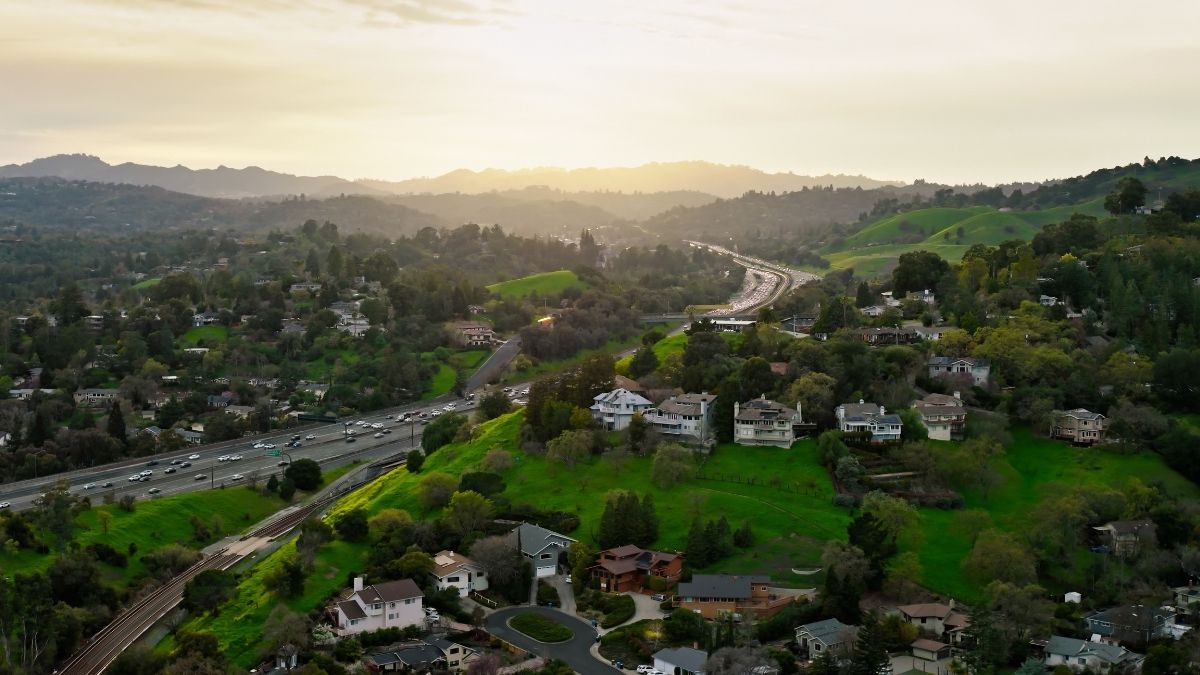
On paper, Danville and Walnut Creek often look interchangeable.
Both offer strong schools. Established neighborhoods. East Bay access. Consistent demand.
But when buyers narrow their search and start comparing actual properties, the differences become clear.
Price per square foot varies. Lot sizes shift. Buyer psychology changes. Long term appreciation drivers differ.
If you are deciding between Danville and Walnut Creek, here is what actually matters beyond headline price.
At first glance, Walnut Creek may appear more affordable on a price per square foot basis.
But that metric alone can mislead.
Danville typically offers
Larger lot sizes
More suburban layout
Lower density feel
Newer planned communities in certain sections
Walnut Creek often offers
Greater walkability near downtown
Higher density housing options
Condos and townhomes near BART
Older established neighborhoods
A $1.6M home in Danville and a $1.6M home in Walnut Creek may deliver very different living experiences.
Value must be measured in lifestyle alignment, not just square footage.
Walnut Creek’s downtown core creates a pricing layer that Danville does not replicate in the same way.
Properties within walking distance to
Broadway Plaza
Restaurants and retail
BART
often command premiums.
Danville’s charm is different. Its downtown is boutique, quieter and more residential in feel.
Buyers choosing between the two should ask
Do we want energy and walkability?
Or do we prefer space and privacy?
Both hold value, but they attract different demand pools.
Both cities have strong school reputations, but buyer perception still influences pricing trends.
Homes aligned with highly sought school zones in either city typically
Experience stronger competition
Show greater resilience in softer markets
Attract long term owner occupants
When comparing pricing, always verify exact school boundaries rather than assuming uniform value across the city.
Micro differences matter.
Danville generally offers
Larger average lot sizes
Wider streets
Lower overall density
More traditional suburban planning
Walnut Creek includes
Larger lots in Northgate and certain established areas
Smaller parcels closer to downtown
Mixed density housing options
For buyers prioritizing backyard usability and privacy, Danville often wins.
For buyers prioritizing access and flexibility, Walnut Creek may align better.
Long term appreciation in both cities is supported by
East Bay commuter access
Strong infrastructure
Established retail and employment corridors
However, Walnut Creek benefits from BART adjacency and regional shopping anchors.
Danville benefits from limited land supply and strong residential identity.
Both markets historically demonstrate stability, but demand drivers differ slightly.
When comparing pricing, ask what fuels future demand.
Walnut Creek typically sees
Higher overall transaction volume
Greater housing type diversity
Danville tends to have
Lower turnover
More single family dominance
Slightly tighter inventory conditions in certain segments
Higher inventory can create negotiating flexibility. Lower inventory can create price pressure.
Understanding inventory rhythm matters more than comparing median price alone.
The biggest pricing mistake buyers make is focusing only on budget.
Danville appeals to buyers seeking
Quiet suburban atmosphere
Larger lots
Slower pace
Walnut Creek appeals to buyers seeking
Walkability
Retail and dining access
Mixed housing options
Neither city is superior.
The right decision depends on what you value daily.
Danville and Walnut Creek both represent strong East Bay markets.
The smarter comparison is not just price per square foot.
It is...
Lifestyle alignment
Inventory behavior
School boundary nuance
Long term demand fundamentals
When those variables are understood clearly, pricing differences make sense.
And the right choice becomes obvious.

Real estate is personal. It’s not just about finding a house or selling a property. It’s about how people live, what matters most and where they want to go next. I’m Mike White, a Lifestyle Real....
Buying near East Bay open space can provide beautiful views and trail access, but the property deserves additional investigation before you make an offer.Homes near ridgelines, regional parks,,
Early fall can create a useful East Bay real estate window for buyers and sellers who understand how September changes the market.The first week of September does not suddenly transform East Bay
East Bay homeowners can reduce wildfire vulnerability by combining defensible space, home hardening, and planning ahead.Late summer is a practical time to look at the property as a system.,
East Bay sellers can protect their time and equity by repairing the correct problems before the home reaches the market.Preparing a home for sale does not mean fixing everything. The better goal is
 Last updated: September 20, 2026 11:08 PM UTC Property Information © 2026 MLSListings Inc. All rights reserved. Listing information is deemed reliable but not guaranteed. The data relating to real estate for sale on this display comes in part from the Internet Data Exchange program of the MLSListingsTM MLS system. Real estate listings held by brokerage firms other than REMAX Accord are marked with the Internet Data Exchange and detailed information about
them includes the names of the listing brokers and listing agents.
The information being provided by CARETS (CLAW, CRISNet MLS, DAMLS, CRMLS, i-Tech MLS, and/or VCRDS)
is for the visitor's personal, non-commercial use and may not be used for any purpose other than to identify
prospective properties visitor may be interested in purchasing.
Any information relating to a property referenced on this web site comes from the Internet Data Exchange (IDX)
program of CARETS. This web site may reference real estate listing(s) held by a brokerage firm other than the
broker and/or agent who owns this web site.
The accuracy of all information, regardless of source, including but not limited to square footages and lot sizes, is
deemed reliable but not guaranteed and should be personally verified through personal inspection by and/or with
the appropriate professionals. The data contained herein is copyrighted by CARETS, CLAW, CRISNet MLS,
DAMLS, CRMLS, i-Tech MLS and/or VCRDS and is protected by all applicable copyright laws. Any dissemination
of this information is in violation of copyright laws and is strictly prohibited.
CARETS, California Real Estate Technology Services, is a consolidated MLS property listing data feed comprised
of CLAW (Combined LA/Westside MLS), CRISNet MLS (Southland Regional AOR), DAMLS (Desert Area MLS),
CRMLS (California Regional MLS), i-Tech MLS (Glendale AOR/Pasadena Foothills AOR) and VCRDS (Ventura
County Regional Data Share)
Show More...
Last updated: September 20, 2026 11:08 PM UTC Property Information © 2026 MLSListings Inc. All rights reserved. Listing information is deemed reliable but not guaranteed. The data relating to real estate for sale on this display comes in part from the Internet Data Exchange program of the MLSListingsTM MLS system. Real estate listings held by brokerage firms other than REMAX Accord are marked with the Internet Data Exchange and detailed information about
them includes the names of the listing brokers and listing agents.
The information being provided by CARETS (CLAW, CRISNet MLS, DAMLS, CRMLS, i-Tech MLS, and/or VCRDS)
is for the visitor's personal, non-commercial use and may not be used for any purpose other than to identify
prospective properties visitor may be interested in purchasing.
Any information relating to a property referenced on this web site comes from the Internet Data Exchange (IDX)
program of CARETS. This web site may reference real estate listing(s) held by a brokerage firm other than the
broker and/or agent who owns this web site.
The accuracy of all information, regardless of source, including but not limited to square footages and lot sizes, is
deemed reliable but not guaranteed and should be personally verified through personal inspection by and/or with
the appropriate professionals. The data contained herein is copyrighted by CARETS, CLAW, CRISNet MLS,
DAMLS, CRMLS, i-Tech MLS and/or VCRDS and is protected by all applicable copyright laws. Any dissemination
of this information is in violation of copyright laws and is strictly prohibited.
CARETS, California Real Estate Technology Services, is a consolidated MLS property listing data feed comprised
of CLAW (Combined LA/Westside MLS), CRISNet MLS (Southland Regional AOR), DAMLS (Desert Area MLS),
CRMLS (California Regional MLS), i-Tech MLS (Glendale AOR/Pasadena Foothills AOR) and VCRDS (Ventura
County Regional Data Share)
Show More...
 All measurements and all calculations of area are approximate. Information provided by Seller/Other sources, not verified by Broker. All interested persons should independently verify accuracy of information. Provided properties may or may not be listed by the office/agent presenting the information. Data maintained by MetroList© may not reflect all real estate activity in the market.
All real estate content on this site is subject to the Federal Fair Housing Act of 1968, as amended, which makes it illegal to advertise any preference, limitation or discrimination because of race, color, religion, sex, handicap, family status or national origin or an intention to make any such preference, limitation or discrimination.
MetroList CA data last updated: September 20, 2026 10:38 PM UTC Terms of Use.
Vendor data provided by Inside Real Estate, LLC.
All measurements and all calculations of area are approximate. Information provided by Seller/Other sources, not verified by Broker. All interested persons should independently verify accuracy of information. Provided properties may or may not be listed by the office/agent presenting the information. Data maintained by MetroList© may not reflect all real estate activity in the market.
All real estate content on this site is subject to the Federal Fair Housing Act of 1968, as amended, which makes it illegal to advertise any preference, limitation or discrimination because of race, color, religion, sex, handicap, family status or national origin or an intention to make any such preference, limitation or discrimination.
MetroList CA data last updated: September 20, 2026 10:38 PM UTC Terms of Use.
Vendor data provided by Inside Real Estate, LLC.
 Bay East ©2026. CCAR ©2026. bridgeMLS ©2026. Information Deemed Reliable But Not Guaranteed. This information is being provided by the Bay East MLS, or CCAR MLS, or bridgeMLS. The listings presented here may or may not be listed by the Broker/Agent operating this website. This information is intended for the personal use of consumers and may not be used for any purpose other than to identify prospective properties consumers may be interested in purchasing. Data last updated at September
20, 2026 11:14 PM UTC
Show More...
Bay East ©2026. CCAR ©2026. bridgeMLS ©2026. Information Deemed Reliable But Not Guaranteed. This information is being provided by the Bay East MLS, or CCAR MLS, or bridgeMLS. The listings presented here may or may not be listed by the Broker/Agent operating this website. This information is intended for the personal use of consumers and may not be used for any purpose other than to identify prospective properties consumers may be interested in purchasing. Data last updated at September
20, 2026 11:14 PM UTC
Show More...
 This information, including square footage, while not guaranteed, has been acquired from sources believed to be reliable. Listings on this page identified as belonging to another listing firm are based upon data obtained from the SFAR MLS, which data is copyrighted by the San Francisco Association of REALTORS©, but is not warranted.
