Buying near East Bay open space can provide beautiful views and trail access, but the property deserves additional investigation before you make an offer.Homes near ridgelines, regional parks,,

Dated: April 10 2026
Views: 5
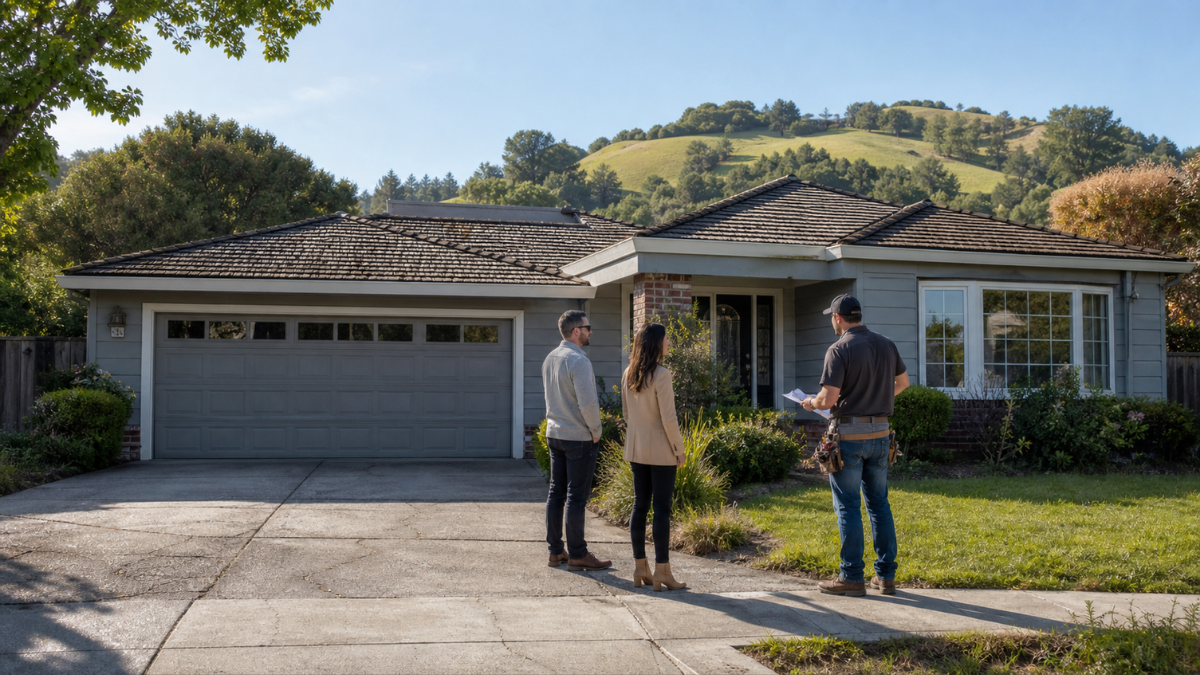
A flip worthy California property needs more than a fair price. Learn what investors calculate before submitting offers.
A dated kitchen, neglected landscaping or worn flooring may create visual opportunity, but cosmetic problems alone do not make a property a good investment.
Successful flips begin with disciplined analysis.
The purchase price, renovation scope, resale value, financing costs, timeline and risk all have to work together. If one of those assumptions is overly optimistic, a project that looked promising at the beginning can quickly become expensive.
The right question is not whether a home could look better.
Almost every property could.
The better question is whether the home can be purchased, improved and resold at a price that justifies the cost, time and uncertainty involved.
Investors often begin by looking at what is wrong with a property.
It can be more useful to begin with the person who might purchase it after the renovation.
Who is the likely resale buyer?
A young family may value schools, bedroom count, storage and a usable backyard. A commuter may prioritize freeway access, BART proximity and a functional home office. A downsizing buyer may prefer a single-level layout with limited maintenance.
The renovation should support the expectations of the likely buyer rather than reflect the investor's personal taste.
Understanding the resale buyer also helps determine which improvements deserve money and which ones are unlikely to produce a meaningful return.
After repair value, commonly called ARV, is the estimated market value of the property after the planned renovation is complete.
This number should be based on comparable renovated homes that have actually sold.
Useful comparisons generally share similar characteristics:
Location
Property type
Living area
Bedroom and bathroom count
Lot utility
School boundaries
Garage configuration
Overall finish level
Sale timing
The highest sale in the neighborhood is not automatically the correct comparison.
That property may have had a superior lot, better privacy, more square footage or a higher level of renovation. Small differences can have a substantial effect on value.
A conservative ARV gives the investment room to absorb changing market conditions. An inflated ARV can make almost any project appear profitable on paper.
A flip-worthy home usually has problems that are understandable, repairable and financially measurable.
Cosmetic issues are generally easier to estimate:
Interior and exterior paint
Flooring
Lighting
Cabinet finishes
Hardware
Landscaping
Fixtures
Appliances
Structural and system-related issues introduce more uncertainty:
Foundation movement
Drainage problems
Roof failure
Electrical deficiencies
Aging plumbing
Sewer damage
Unpermitted additions
Extensive water intrusion
Insurance complications
A property can still be a viable investment when these problems exist, but the purchase price and contingency budget must reflect the risk.
Investors should use qualified inspectors and contractors when evaluating work outside their own expertise.
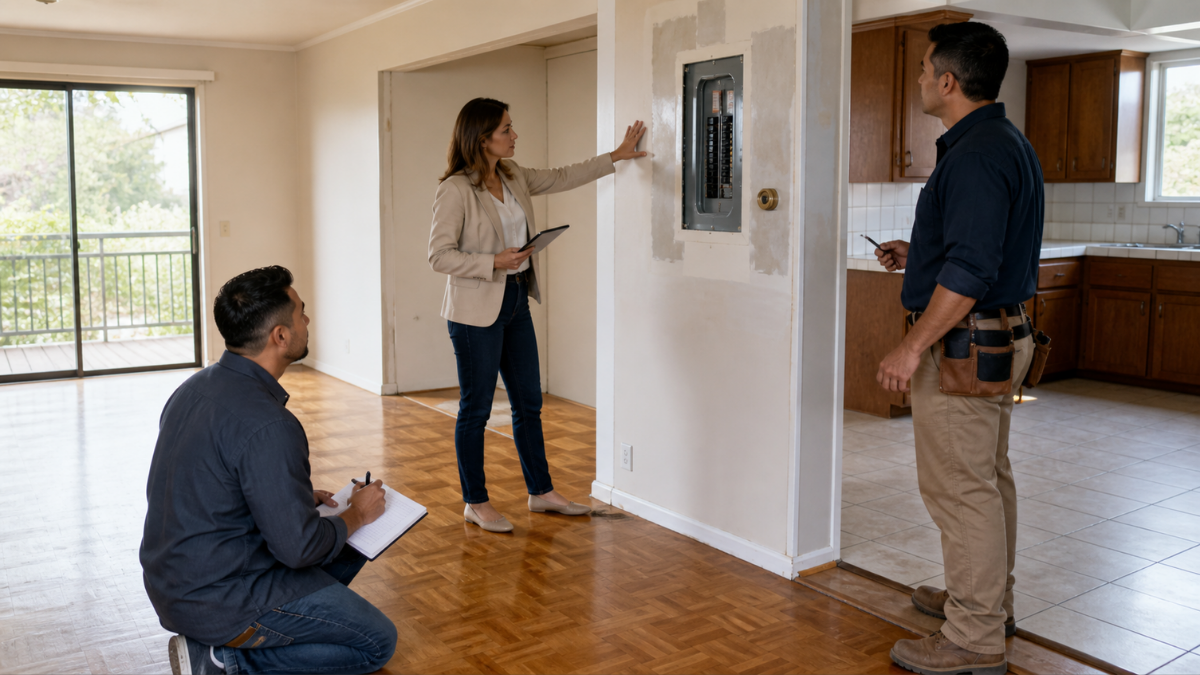
Not every dated feature must be replaced.
The renovation budget should distinguish between work required for safety, function or marketability and improvements that are simply desirable.
Necessary work might include repairing active leaks, correcting electrical hazards or replacing damaged flooring.
Optional work might include changing a functional countertop because another material is more fashionable.
The final product needs to compete effectively with nearby homes. It does not need to become the most expensive renovation in the neighborhood.
Overbuilding can be just as damaging to profitability as underestimating repairs.
Paint, flooring and lighting can transform how a home feels, but they cannot always solve a poor floor plan.
Before buying, consider:
Bedroom placement
Bathroom access
Kitchen circulation
Natural light
Ceiling height
Storage
Laundry location
Indoor and outdoor connection
Additions that interrupt normal traffic flow
Some layout problems can be corrected efficiently. Others require structural changes, engineering, permits and significant time.
A home with a naturally functional layout may create a better investment than a cheaper property requiring major reconfiguration.
A realistic budget includes more than visible construction work.
Potential expenses include:
Labor
Materials
Permits
Architecture or engineering
Demolition
Debris removal
Utility costs
Insurance
Landscaping
Staging
Photography
Sales preparation
Contingency reserves
Contractor estimates should be specific about what is included and excluded.
An estimate that says "renovate kitchen" is not detailed enough. Cabinet work, countertops, appliances, plumbing, electrical work, lighting, flooring and finish carpentry may all need separate allowances.
The contingency reserve matters because walls, floors and inspection reports can reveal conditions that were not visible during the initial evaluation.
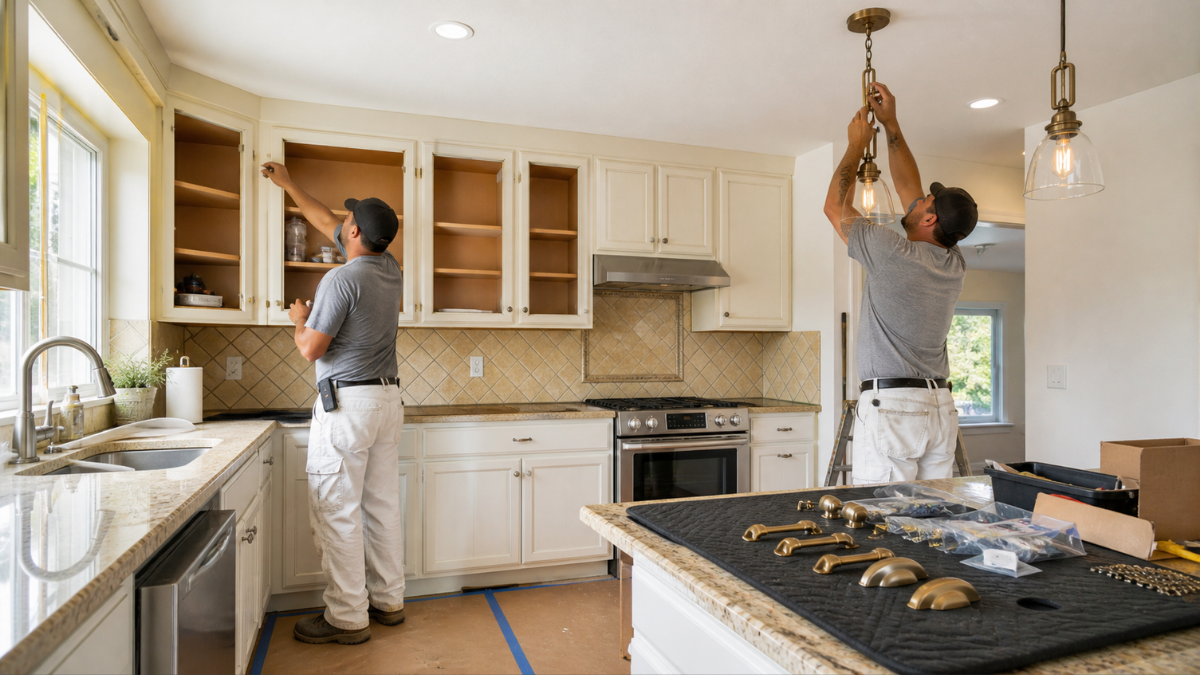
Every additional month can affect the return.
Holding costs may include:
Loan payments
Property taxes
Insurance
Utilities
Maintenance
Security
Financing fees
Opportunity cost
A renovation that takes six months instead of four months does not simply delay the resale. It creates additional expenses while capital remains committed to the project.
Permit requirements, contractor availability, material lead times and the complexity of the renovation should be considered before the purchase.
Fast is not always better, but avoidable delays are rarely free.
A beautiful renovation cannot completely overcome the limits of its location.
Buyers compare the finished property with other homes available in the same area and price range. They may also compare it with larger or newer homes in nearby communities.
Before purchasing, identify the likely upper end of the local market.
Ask:
How many renovated homes have sold near the projected resale price?
How long did they take to sell?
Did they receive multiple offers?
Were price reductions required?
What features separated the strongest sales from the weaker ones?
Would the proposed resale price push buyers into a more desirable competing neighborhood?
A project becomes increasingly risky when profitability depends on establishing a new neighborhood price record.
The strongest opportunities often involve problems that discourage typical buyers but can be addressed with a clear plan.
Examples may include:
Deferred cosmetic maintenance
Poor listing presentation
Heavy personal belongings
Unattractive paint colors
Worn but repairable finishes
Overgrown landscaping
A seller who values certainty and timing
A property that requires coordinated repairs before conventional buyers feel comfortable
The problem should be solvable.
A difficult location, unusable lot or permanent neighborhood disadvantage cannot be renovated away.
The market at resale may not be identical to the market at purchase.
Inventory, mortgage rates, buyer confidence and competing listings can all change during the renovation.
A responsible analysis should test what happens if:
The resale price is lower than expected
Renovation costs increase
The project takes longer
Buyer demand weakens
Financing becomes more expensive
A competing renovated property enters the market
If the project only works under the most optimistic assumptions, it may not offer enough protection for the risk.
A resale is not always the only possible exit.
Depending on financing, zoning, rental demand and the investor's objectives, another strategy could include:
Completing a lighter renovation and selling sooner
Holding the property as a rental
Selling to another investor
Delaying nonessential improvements
Repositioning the property for a different buyer segment
Alternative options should be evaluated before purchasing, not invented after the original plan encounters trouble.
A flip-worthy California property is not simply an unattractive home with potential.
It is a property where the acquisition price, renovation plan, market demand, resale value and timeline support one another.
The best investors remain conservative about resale value, realistic about construction costs and disciplined about the maximum purchase price.
They also understand that walking away is part of the business.
If you are evaluating an East Bay investment property, I can help you compare recent sales, estimate the likely resale range and identify the property features buyers are rewarding in the current market.
Mike White, Realtor
DRE# 02209144
REMAX Accord

Real estate is personal. It’s not just about finding a house or selling a property. It’s about how people live, what matters most and where they want to go next. I’m Mike White, a Lifestyle Real....
Buying near East Bay open space can provide beautiful views and trail access, but the property deserves additional investigation before you make an offer.Homes near ridgelines, regional parks,,
Early fall can create a useful East Bay real estate window for buyers and sellers who understand how September changes the market.The first week of September does not suddenly transform East Bay
East Bay homeowners can reduce wildfire vulnerability by combining defensible space, home hardening, and planning ahead.Late summer is a practical time to look at the property as a system.,
East Bay sellers can protect their time and equity by repairing the correct problems before the home reaches the market.Preparing a home for sale does not mean fixing everything. The better goal is
 Last updated: September 22, 2026 11:27 PM UTC Property Information © 2026 MLSListings Inc. All rights reserved. Listing information is deemed reliable but not guaranteed. The data relating to real estate for sale on this display comes in part from the Internet Data Exchange program of the MLSListingsTM MLS system. Real estate listings held by brokerage firms other than REMAX Accord are marked with the Internet Data Exchange and detailed information about
them includes the names of the listing brokers and listing agents.
The information being provided by CARETS (CLAW, CRISNet MLS, DAMLS, CRMLS, i-Tech MLS, and/or VCRDS)
is for the visitor's personal, non-commercial use and may not be used for any purpose other than to identify
prospective properties visitor may be interested in purchasing.
Any information relating to a property referenced on this web site comes from the Internet Data Exchange (IDX)
program of CARETS. This web site may reference real estate listing(s) held by a brokerage firm other than the
broker and/or agent who owns this web site.
The accuracy of all information, regardless of source, including but not limited to square footages and lot sizes, is
deemed reliable but not guaranteed and should be personally verified through personal inspection by and/or with
the appropriate professionals. The data contained herein is copyrighted by CARETS, CLAW, CRISNet MLS,
DAMLS, CRMLS, i-Tech MLS and/or VCRDS and is protected by all applicable copyright laws. Any dissemination
of this information is in violation of copyright laws and is strictly prohibited.
CARETS, California Real Estate Technology Services, is a consolidated MLS property listing data feed comprised
of CLAW (Combined LA/Westside MLS), CRISNet MLS (Southland Regional AOR), DAMLS (Desert Area MLS),
CRMLS (California Regional MLS), i-Tech MLS (Glendale AOR/Pasadena Foothills AOR) and VCRDS (Ventura
County Regional Data Share)
Show More...
Last updated: September 22, 2026 11:27 PM UTC Property Information © 2026 MLSListings Inc. All rights reserved. Listing information is deemed reliable but not guaranteed. The data relating to real estate for sale on this display comes in part from the Internet Data Exchange program of the MLSListingsTM MLS system. Real estate listings held by brokerage firms other than REMAX Accord are marked with the Internet Data Exchange and detailed information about
them includes the names of the listing brokers and listing agents.
The information being provided by CARETS (CLAW, CRISNet MLS, DAMLS, CRMLS, i-Tech MLS, and/or VCRDS)
is for the visitor's personal, non-commercial use and may not be used for any purpose other than to identify
prospective properties visitor may be interested in purchasing.
Any information relating to a property referenced on this web site comes from the Internet Data Exchange (IDX)
program of CARETS. This web site may reference real estate listing(s) held by a brokerage firm other than the
broker and/or agent who owns this web site.
The accuracy of all information, regardless of source, including but not limited to square footages and lot sizes, is
deemed reliable but not guaranteed and should be personally verified through personal inspection by and/or with
the appropriate professionals. The data contained herein is copyrighted by CARETS, CLAW, CRISNet MLS,
DAMLS, CRMLS, i-Tech MLS and/or VCRDS and is protected by all applicable copyright laws. Any dissemination
of this information is in violation of copyright laws and is strictly prohibited.
CARETS, California Real Estate Technology Services, is a consolidated MLS property listing data feed comprised
of CLAW (Combined LA/Westside MLS), CRISNet MLS (Southland Regional AOR), DAMLS (Desert Area MLS),
CRMLS (California Regional MLS), i-Tech MLS (Glendale AOR/Pasadena Foothills AOR) and VCRDS (Ventura
County Regional Data Share)
Show More...
 All measurements and all calculations of area are approximate. Information provided by Seller/Other sources, not verified by Broker. All interested persons should independently verify accuracy of information. Provided properties may or may not be listed by the office/agent presenting the information. Data maintained by MetroList© may not reflect all real estate activity in the market.
All real estate content on this site is subject to the Federal Fair Housing Act of 1968, as amended, which makes it illegal to advertise any preference, limitation or discrimination because of race, color, religion, sex, handicap, family status or national origin or an intention to make any such preference, limitation or discrimination.
MetroList CA data last updated: September 22, 2026 11:07 PM UTC Terms of Use.
Vendor data provided by Inside Real Estate, LLC.
All measurements and all calculations of area are approximate. Information provided by Seller/Other sources, not verified by Broker. All interested persons should independently verify accuracy of information. Provided properties may or may not be listed by the office/agent presenting the information. Data maintained by MetroList© may not reflect all real estate activity in the market.
All real estate content on this site is subject to the Federal Fair Housing Act of 1968, as amended, which makes it illegal to advertise any preference, limitation or discrimination because of race, color, religion, sex, handicap, family status or national origin or an intention to make any such preference, limitation or discrimination.
MetroList CA data last updated: September 22, 2026 11:07 PM UTC Terms of Use.
Vendor data provided by Inside Real Estate, LLC.
 Bay East ©2026. CCAR ©2026. bridgeMLS ©2026. Information Deemed Reliable But Not Guaranteed. This information is being provided by the Bay East MLS, or CCAR MLS, or bridgeMLS. The listings presented here may or may not be listed by the Broker/Agent operating this website. This information is intended for the personal use of consumers and may not be used for any purpose other than to identify prospective properties consumers may be interested in purchasing. Data last updated at September
22, 2026 11:10 PM UTC
Show More...
Bay East ©2026. CCAR ©2026. bridgeMLS ©2026. Information Deemed Reliable But Not Guaranteed. This information is being provided by the Bay East MLS, or CCAR MLS, or bridgeMLS. The listings presented here may or may not be listed by the Broker/Agent operating this website. This information is intended for the personal use of consumers and may not be used for any purpose other than to identify prospective properties consumers may be interested in purchasing. Data last updated at September
22, 2026 11:10 PM UTC
Show More...
 This information, including square footage, while not guaranteed, has been acquired from sources believed to be reliable. Listings on this page identified as belonging to another listing firm are based upon data obtained from the SFAR MLS, which data is copyrighted by the San Francisco Association of REALTORS©, but is not warranted.
