Buying near East Bay open space can provide beautiful views and trail access, but the property deserves additional investigation before you make an offer.Homes near ridgelines, regional parks,,

Dated: April 3 2026
Views: 3
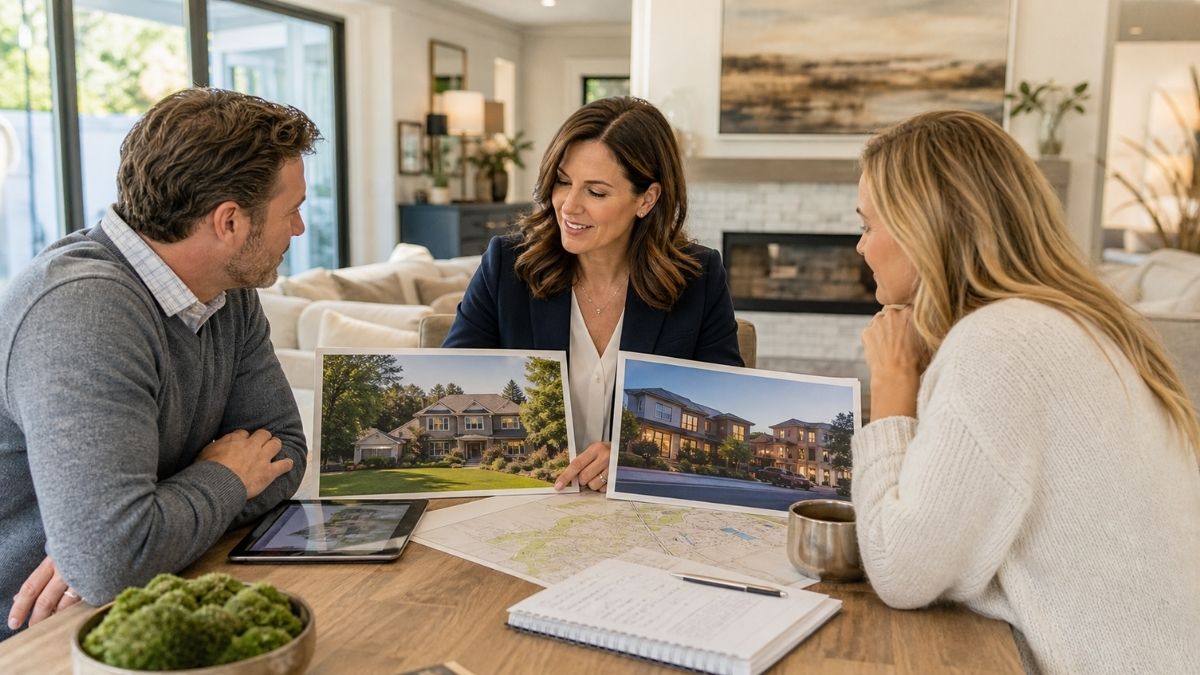
Danville and Walnut Creek are two of the East Bay’s most recognizable residential markets. Both offer attractive neighborhoods, established downtown areas, outdoor recreation and access to major employment centers.
Yet two homes with similar square footage, bedroom count and apparent condition can carry very different prices.
The reason is not simply that one city is “more expensive.” Each market contains different housing types, lot patterns, transportation options and buyer expectations. Even within the same city, pricing can change significantly from one neighborhood to the next.
A useful comparison begins with the complete property—not a citywide median or price-per-square-foot calculation.
Median sale prices are frequently used to compare communities, but they are heavily influenced by what happened to sell during a particular period.
If Danville records a larger share of detached homes with generous lots, its median may rise even if individual property values remain relatively stable. If Walnut Creek records more condominium sales during the same month, its citywide median may appear lower.
That does not mean every Danville home costs more than every Walnut Creek home.
The two markets have different mixes of:
Detached houses
Condominiums
Townhomes
Luxury properties
Age-restricted communities
Downtown residences
Hillside homes
Larger suburban lots
Properties near transit
A comparison should begin by matching similar property types rather than comparing the headline figures for each city.
Danville is primarily associated with detached residential neighborhoods, a small-town atmosphere and proximity to open space.
Many buyers considering Danville are looking for a complete package: a detached home, functional yard, quieter residential setting, usable interior space and convenient access to downtown, parks or trails.
Several characteristics can support stronger pricing:
Larger or more usable lots
Lower-density neighborhood patterns
Newer housing in certain areas
Multiple-car garages
Larger floor plans
Outdoor entertaining space
Access to parks and open space
Limited supply within a preferred neighborhood
Scarcity matters. When several buyers are seeking the same combination of lot, layout, condition and location, a well-positioned home can receive strong attention even when the broader market is more selective.
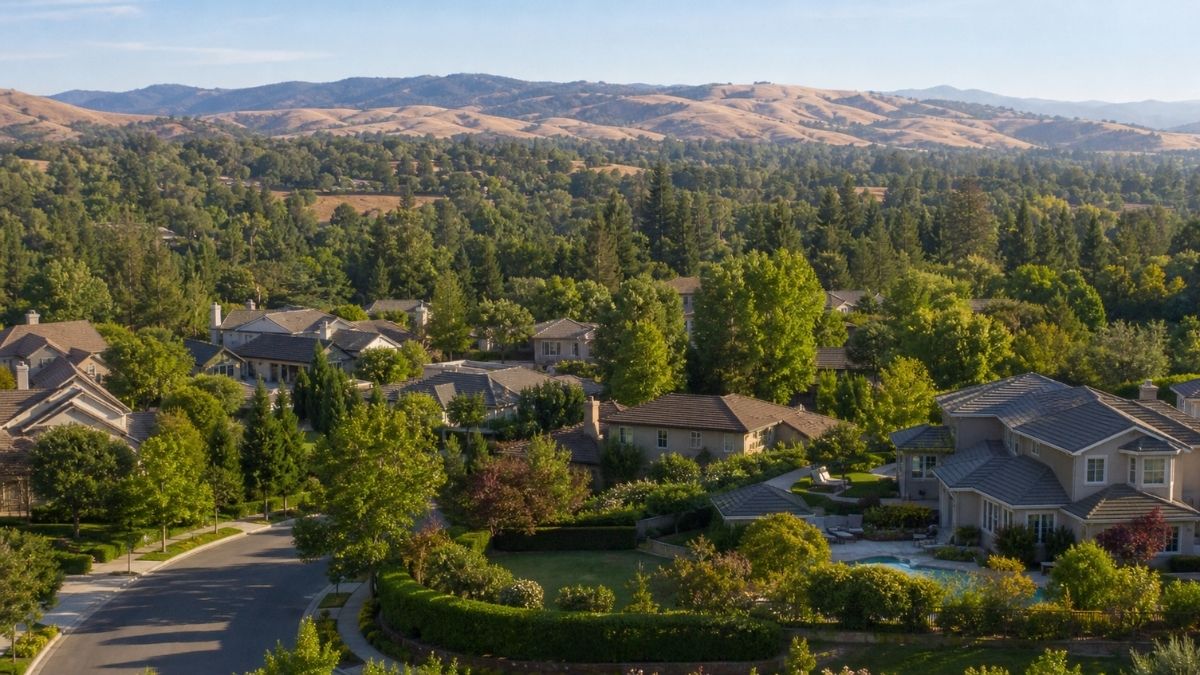
It is a mistake to treat Danville as one uniform luxury market.
Pricing can be affected by:
Proximity to downtown
Lot slope and usability
Road noise
Age and style of construction
Renovation quality
HOA fees and restrictions
Gated versus nongated settings
Views
Pool condition
Fire-zone and insurance considerations
Access to daily services
A larger hillside property may offer privacy and views but have less usable outdoor space. A smaller home near downtown may command a premium because of its location and lifestyle.
Square footage alone will not reveal which property buyers are likely to prefer.
Walnut Creek includes a wide range of residential options, from downtown condominiums to traditional detached neighborhoods and substantial hillside homes.
This creates more variation in entry price, ownership cost and daily lifestyle.
A buyer may choose Walnut Creek for:
Proximity to BART
A walkable downtown
Restaurants, shopping and cultural amenities
Easier access to employment centers
Condominium or townhome options
Established detached-home neighborhoods
Hillside views
A lower-maintenance property
Because the housing mix is broader, a Walnut Creek citywide median may say very little about the value of a specific home.
A detached property in a highly desired residential pocket should not be compared directly with a downtown condominium simply because both have a Walnut Creek address.
Walnut Creek’s BART access is an important distinction.
For buyers who commute by rail or value the option to reach other parts of the Bay Area without driving, proximity to the station can materially influence a property’s appeal.
But the relationship is not always straightforward.
Some buyers will pay more for walkability and reduced car dependence. Others prefer greater distance from station activity, traffic or higher-density development.
The relevant question is not simply whether a property is near transit. It is whether the property delivers the combination of access, privacy, parking and neighborhood environment desired by its likely buyers.
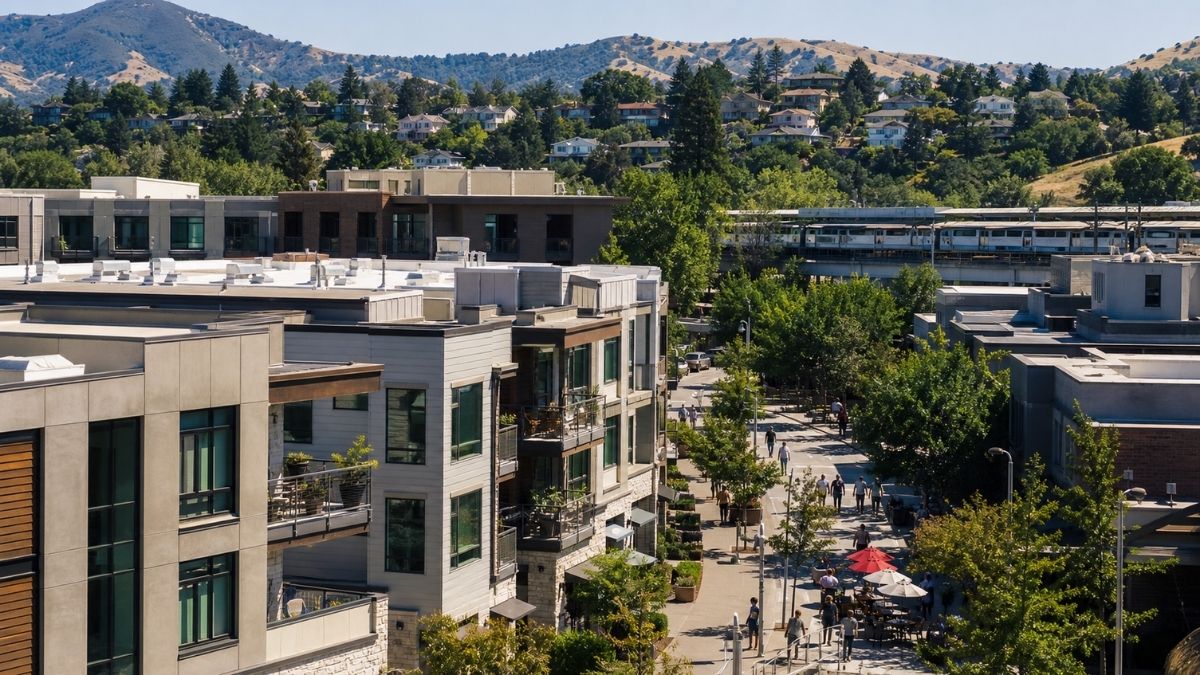
Both communities have appealing downtown districts, but the experiences are different.
Danville’s downtown supports a small-town atmosphere with restaurants, shops, civic facilities and connections to trails and recreation. Homes near the downtown area may attract buyers who want that charm while retaining a more suburban residential setting.
Walnut Creek’s downtown is larger and more urban in character, with a broader concentration of dining, retail, entertainment, employment and multifamily housing.
Neither lifestyle is inherently better. They appeal to different priorities.
A buyer who wants a larger yard and quieter street may allocate more of the budget to the property itself. A buyer who values walkability and transit may accept a smaller home or attached residence to secure the preferred location.
Lot square footage can be one of the most misleading data points in an East Bay comparison.
A large hillside parcel may contain less functional outdoor space than a smaller level lot. Retaining walls, drainage, easements, mature trees and setback requirements can affect how the property can be used.
Evaluate:
Level yard area
Privacy
Sun exposure
Drainage
Slope
Access
Pool or ADU potential
Landscaping maintenance
Outdoor entertaining space
Relationship to neighboring homes
Danville may offer more opportunities for larger suburban lots, but every lot still needs individual evaluation.
Walnut Creek’s varied terrain creates its own tradeoffs. Hillside homes may provide views and privacy while requiring additional attention to access, drainage, insurance and outdoor usability.
Two similarly priced homes may have very different ownership needs.
Some neighborhoods offer newer construction, more contemporary layouts and updated building systems. Other areas feature older homes with architectural character, mature landscaping and opportunities for renovation.
Buyers should consider more than visible finishes:
Roof age
Electrical capacity
Plumbing materials
Foundation condition
Drainage
Window efficiency
HVAC systems
Sewer responsibility
Permit history
Insurance implications
A lower purchase price can be offset by significant near-term improvements. A renovated home may justify a premium when the work is well executed and major systems have also been addressed.
Price per square foot can help identify patterns, but it should not be used as a shortcut to value.
It does not adequately account for:
Lot quality
Location
Views
Floor-plan efficiency
Garage space
Condition
Renovation quality
Outdoor improvements
HOA amenities
Property type
Smaller homes often sell at a higher price per square foot because the land and location represent a larger share of the total value. Larger homes may show a lower rate even when their total price is substantially higher.
Use this measurement as one piece of the analysis, not the conclusion.
A fair comparison should include the complete cost of owning each property.
Depending on the home, buyers may need to consider:
HOA dues
Landscaping
Pool maintenance
Insurance
Utility usage
Roof or exterior responsibility
Commuting expense
Parking
Near-term repairs
Special assessments
A Walnut Creek condominium may have a lower purchase price but meaningful monthly dues. Those dues may also cover exterior maintenance, insurance or amenities that a detached homeowner would pay for independently.
A larger Danville property may have no HOA but require more landscaping, exterior maintenance and utility expense.
The best comparison converts these differences into a realistic monthly and long-term budget.
When choosing between the two markets, consider who is likely to buy the property from you later.
Broadly appealing features tend to support resale:
Functional layout
Good natural light
Useful outdoor space
Appropriate parking
Well-maintained systems
Reasonable access
Privacy
Improvements consistent with the neighborhood
Highly unusual homes can be wonderful for the right owner, but they may appeal to a narrower audience.
Resale analysis should remain property-specific. A well-located Walnut Creek townhome may have stronger demand than a compromised detached home elsewhere. A thoughtfully updated Danville home with a great lot may outperform a larger property with poor functionality.
Instead of asking which city is better, define the housing experience you want.
Start with questions such as:
Do you prefer a detached home or would you consider attached housing?
How important is rail access?
How much yard do you want to maintain?
Is downtown walkability a priority?
Do you need a particular garage or storage arrangement?
Would you rather purchase renovated condition or create it yourself?
How important are views, privacy or open-space access?
What total ownership cost feels comfortable?
Then compare actual homes meeting those priorities.
This produces a more useful conclusion than choosing a city first and attempting to make every property within it fit.
Sellers should also avoid applying a citywide statistic directly to their home.
The most relevant comparable sales will usually share the property’s housing type, location, lot pattern, condition and buyer profile.
A Danville seller should not assume that every local premium applies equally to a dated home with a difficult lot. A Walnut Creek seller should not undervalue a special detached property because the city contains a large number of attached-home sales.
Accurate pricing requires understanding what buyers will compare with the property when it reaches the market.
Danville often attracts buyers seeking detached homes, larger lots, open space and a smaller-town residential atmosphere.
Walnut Creek offers a wider housing range, stronger direct transit access and a more urban downtown lifestyle.
But value is not determined by the city name alone.
It comes from the interaction of property type, location, condition, lot, access and the buyer’s priorities. A home that appears more expensive on paper may deliver better long-term value if it avoids compromises that would otherwise require another move.
If you are comparing Danville and Walnut Creek, I can help you evaluate actual properties, relevant sales and total ownership costs rather than relying on broad market averages.
Mike White, Realtor
DRE# 02209144
REMAX Accord

Real estate is personal. It’s not just about finding a house or selling a property. It’s about how people live, what matters most and where they want to go next. I’m Mike White, a Lifestyle Real....
Buying near East Bay open space can provide beautiful views and trail access, but the property deserves additional investigation before you make an offer.Homes near ridgelines, regional parks,,
Early fall can create a useful East Bay real estate window for buyers and sellers who understand how September changes the market.The first week of September does not suddenly transform East Bay
East Bay homeowners can reduce wildfire vulnerability by combining defensible space, home hardening, and planning ahead.Late summer is a practical time to look at the property as a system.,
East Bay sellers can protect their time and equity by repairing the correct problems before the home reaches the market.Preparing a home for sale does not mean fixing everything. The better goal is
 Last updated: September 22, 2026 11:27 PM UTC Property Information © 2026 MLSListings Inc. All rights reserved. Listing information is deemed reliable but not guaranteed. The data relating to real estate for sale on this display comes in part from the Internet Data Exchange program of the MLSListingsTM MLS system. Real estate listings held by brokerage firms other than REMAX Accord are marked with the Internet Data Exchange and detailed information about
them includes the names of the listing brokers and listing agents.
The information being provided by CARETS (CLAW, CRISNet MLS, DAMLS, CRMLS, i-Tech MLS, and/or VCRDS)
is for the visitor's personal, non-commercial use and may not be used for any purpose other than to identify
prospective properties visitor may be interested in purchasing.
Any information relating to a property referenced on this web site comes from the Internet Data Exchange (IDX)
program of CARETS. This web site may reference real estate listing(s) held by a brokerage firm other than the
broker and/or agent who owns this web site.
The accuracy of all information, regardless of source, including but not limited to square footages and lot sizes, is
deemed reliable but not guaranteed and should be personally verified through personal inspection by and/or with
the appropriate professionals. The data contained herein is copyrighted by CARETS, CLAW, CRISNet MLS,
DAMLS, CRMLS, i-Tech MLS and/or VCRDS and is protected by all applicable copyright laws. Any dissemination
of this information is in violation of copyright laws and is strictly prohibited.
CARETS, California Real Estate Technology Services, is a consolidated MLS property listing data feed comprised
of CLAW (Combined LA/Westside MLS), CRISNet MLS (Southland Regional AOR), DAMLS (Desert Area MLS),
CRMLS (California Regional MLS), i-Tech MLS (Glendale AOR/Pasadena Foothills AOR) and VCRDS (Ventura
County Regional Data Share)
Show More...
Last updated: September 22, 2026 11:27 PM UTC Property Information © 2026 MLSListings Inc. All rights reserved. Listing information is deemed reliable but not guaranteed. The data relating to real estate for sale on this display comes in part from the Internet Data Exchange program of the MLSListingsTM MLS system. Real estate listings held by brokerage firms other than REMAX Accord are marked with the Internet Data Exchange and detailed information about
them includes the names of the listing brokers and listing agents.
The information being provided by CARETS (CLAW, CRISNet MLS, DAMLS, CRMLS, i-Tech MLS, and/or VCRDS)
is for the visitor's personal, non-commercial use and may not be used for any purpose other than to identify
prospective properties visitor may be interested in purchasing.
Any information relating to a property referenced on this web site comes from the Internet Data Exchange (IDX)
program of CARETS. This web site may reference real estate listing(s) held by a brokerage firm other than the
broker and/or agent who owns this web site.
The accuracy of all information, regardless of source, including but not limited to square footages and lot sizes, is
deemed reliable but not guaranteed and should be personally verified through personal inspection by and/or with
the appropriate professionals. The data contained herein is copyrighted by CARETS, CLAW, CRISNet MLS,
DAMLS, CRMLS, i-Tech MLS and/or VCRDS and is protected by all applicable copyright laws. Any dissemination
of this information is in violation of copyright laws and is strictly prohibited.
CARETS, California Real Estate Technology Services, is a consolidated MLS property listing data feed comprised
of CLAW (Combined LA/Westside MLS), CRISNet MLS (Southland Regional AOR), DAMLS (Desert Area MLS),
CRMLS (California Regional MLS), i-Tech MLS (Glendale AOR/Pasadena Foothills AOR) and VCRDS (Ventura
County Regional Data Share)
Show More...
 All measurements and all calculations of area are approximate. Information provided by Seller/Other sources, not verified by Broker. All interested persons should independently verify accuracy of information. Provided properties may or may not be listed by the office/agent presenting the information. Data maintained by MetroList© may not reflect all real estate activity in the market.
All real estate content on this site is subject to the Federal Fair Housing Act of 1968, as amended, which makes it illegal to advertise any preference, limitation or discrimination because of race, color, religion, sex, handicap, family status or national origin or an intention to make any such preference, limitation or discrimination.
MetroList CA data last updated: September 22, 2026 11:07 PM UTC Terms of Use.
Vendor data provided by Inside Real Estate, LLC.
All measurements and all calculations of area are approximate. Information provided by Seller/Other sources, not verified by Broker. All interested persons should independently verify accuracy of information. Provided properties may or may not be listed by the office/agent presenting the information. Data maintained by MetroList© may not reflect all real estate activity in the market.
All real estate content on this site is subject to the Federal Fair Housing Act of 1968, as amended, which makes it illegal to advertise any preference, limitation or discrimination because of race, color, religion, sex, handicap, family status or national origin or an intention to make any such preference, limitation or discrimination.
MetroList CA data last updated: September 22, 2026 11:07 PM UTC Terms of Use.
Vendor data provided by Inside Real Estate, LLC.
 Bay East ©2026. CCAR ©2026. bridgeMLS ©2026. Information Deemed Reliable But Not Guaranteed. This information is being provided by the Bay East MLS, or CCAR MLS, or bridgeMLS. The listings presented here may or may not be listed by the Broker/Agent operating this website. This information is intended for the personal use of consumers and may not be used for any purpose other than to identify prospective properties consumers may be interested in purchasing. Data last updated at September
22, 2026 11:10 PM UTC
Show More...
Bay East ©2026. CCAR ©2026. bridgeMLS ©2026. Information Deemed Reliable But Not Guaranteed. This information is being provided by the Bay East MLS, or CCAR MLS, or bridgeMLS. The listings presented here may or may not be listed by the Broker/Agent operating this website. This information is intended for the personal use of consumers and may not be used for any purpose other than to identify prospective properties consumers may be interested in purchasing. Data last updated at September
22, 2026 11:10 PM UTC
Show More...
 This information, including square footage, while not guaranteed, has been acquired from sources believed to be reliable. Listings on this page identified as belonging to another listing firm are based upon data obtained from the SFAR MLS, which data is copyrighted by the San Francisco Association of REALTORS©, but is not warranted.
