Buying near East Bay open space can provide beautiful views and trail access, but the property deserves additional investigation before you make an offer.Homes near ridgelines, regional parks,,

Dated: May 22 2026
Views: 3

An East Bay condominium and a single-family home can both serve as rental investments, but they create very different ownership experiences.
A condo may provide a lower purchase price, shared exterior maintenance and access to locations where detached homes are substantially more expensive. A single-family property may offer more control, outdoor space and broader appeal to tenants seeking a traditional home.
The better choice is not determined by property type alone.
Investors should compare rental demand, operating expenses, homeowners association rules, maintenance responsibilities and the amount of control they want over the property.
Before comparing listings, clarify what you want the investment to accomplish.
Are you seeking current cash flow, long-term appreciation potential, lower management demands or a property you may eventually occupy? Are you comfortable with variable repair expenses, or would you prefer more predictable monthly costs?
A condo may appeal to an investor who values a simpler exterior-maintenance arrangement. A single-family home may appeal to someone willing to accept greater responsibility in exchange for more autonomy.
The objective should guide the property selection. Otherwise, an attractive listing can pull the decision away from the original strategy.
Different properties attract different renters.
A condo near transit, employment and shopping may appeal to a professional household prioritizing convenience. A single-family home with multiple bedrooms, parking and a usable yard may appeal to tenants seeking more space or a longer-term residential experience.
Consider how the property serves its likely tenant:
Bedroom and bathroom configuration
Parking
Laundry
Storage
Outdoor space
Transportation access
Work-from-home flexibility
Building amenities
Privacy
Maintenance expectations
The goal is not to make assumptions about who will occupy the home. It is to understand which practical needs the property satisfies and how many competing rentals offer the same combination.
Condo buyers sometimes compare the purchase prices without fully integrating the monthly homeowners association fee.
That fee may fund valuable services and common-area expenses, including exterior maintenance, landscaping, insurance for covered components, amenities or professional management. The exact coverage varies by association.
Review what the fee includes and what remains the owner’s responsibility. Two communities with similar fees may provide very different levels of service.
The analysis should include:
Current monthly dues
Recent increases
Services and utilities included
Owner-maintained components
Anticipated capital projects
Special assessments
The effect of dues on cash flow
A fee is not inherently negative when it pays for work the owner would otherwise fund. It becomes a concern when the cost, coverage and financial condition of the association do not support the investment.
When purchasing a condo, you are evaluating both the residence and the organization responsible for the common property.
Review the governing documents, available financial statements, reserve information, insurance materials, meeting minutes and current or anticipated litigation with appropriate professionals.
Important questions may include:
Are rentals restricted or capped?
Is there a required minimum lease term?
Are there rules affecting pets, parking or move-ins?
Are major common-area repairs being discussed?
Does the association appear adequately funded?
Have owners recently received special assessments?
Are insurance conditions changing?
A beautiful unit can still be a difficult investment if rental restrictions conflict with the plan or the association faces significant unresolved expenses.
Do not assume current rules will remain unchanged. Understand the governing process and how future decisions are made.

A detached home generally gives the investor more authority over maintenance, improvements and property management decisions.
There is no association deciding when the roof, landscaping or exterior should be updated—unless the home belongs to a planned community with its own governing documents. The owner can often select vendors, schedule projects and choose improvements based on the investment strategy.
That control also creates responsibility.
When the roof leaks, fence fails or drainage needs correction, the cost belongs to the owner. There is no shared reserve fund spreading the expense across many units.
Investors who prefer autonomy should also be prepared to maintain appropriate reserves and coordinate the work.
One common misconception is that a condo is maintenance-free.
The association may handle certain exterior and common components, but the owner remains responsible for the interior and any items assigned to the unit under the governing documents. Plumbing, HVAC equipment, appliances, windows or balconies may have responsibilities that vary by project.
Likewise, a single-family home may not always be more difficult to maintain. A newer home with simple landscaping may require less attention than an older condo in a complex facing major capital work.
Evaluate the actual building, age, systems and documents rather than relying on assumptions about the property category.
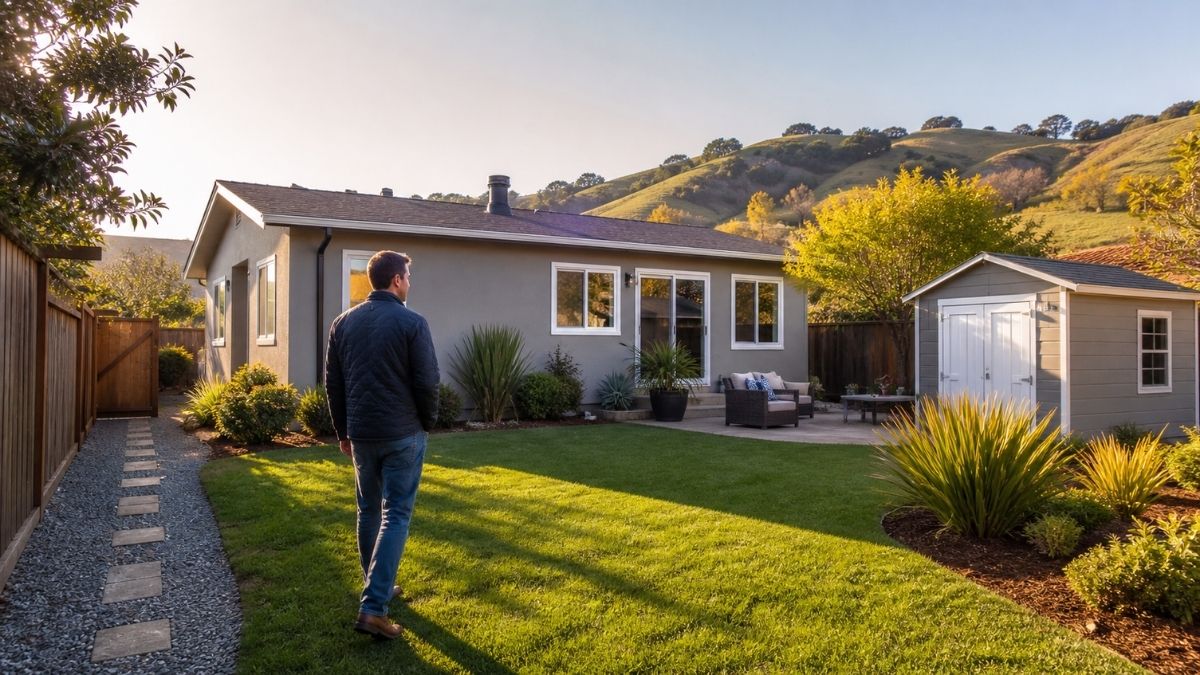
Insurance arrangements differ between condos and detached homes.
A condominium association typically maintains a master policy covering specified common elements and risks. The unit owner may still need coverage for interior improvements, personal liability, lost rental income, deductibles or other exposures.
The line between association and owner responsibility can be important after a loss.
A single-family landlord generally insures the complete structure and property directly. Location, condition, roof age and other factors can affect availability and cost.
Obtain appropriate insurance information before relying on a projected operating budget. Review coverage questions with a qualified insurance professional.
Financing can be influenced by the borrower, property and project.
For a condominium, lenders may evaluate aspects of the development in addition to the individual unit. Investors should discuss occupancy requirements, association conditions and loan options with their lender before making assumptions about qualification.
Resale should also be considered. A well-located condo at an accessible price point may attract a broad audience. A detached home may appeal to buyers seeking land, privacy and control.
Neither property type is automatically easier to sell. Marketability depends on price, condition, location, association health, buyer demand and available financing.
The operating budgets should reflect how each property actually works.
For a condo, include:
Mortgage payments
Property taxes
Unit-owner insurance
HOA dues
Interior maintenance
Vacancy and turnover
Property management
Potential assessment exposure
For a single-family home, include:
Mortgage payments
Property taxes
Landlord insurance
Exterior and interior maintenance
Landscaping
Roof and system reserves
Vacancy and turnover
Property management
Do not simply remove exterior maintenance from the condo model or insert a generic percentage into the house model. Research the actual property and build reasonable allowances.
Test what happens when dues rise, an assessment is imposed or the house requires a major repair.
The central difference often comes down to control and predictability.
A condo may offer more predictable routine expenses because some maintenance is bundled into the HOA dues. However, the investor has less control over association budgets, project timing and rules.
A single-family home provides more direct control, but expenses may arrive unevenly. The owner decides how to respond, yet also carries the entire obligation.
Investors should choose the risk profile they understand and can support.
A condo inspection should not end at the unit’s walls.
Review the visible condition of the building exterior, roof, common areas, drainage, parking and amenities. Understand which components the association maintains and how their condition relates to the financial documents.
For a single-family home, evaluate the complete property. The roof, sewer, foundation, drainage, landscaping, fencing and accessory structures can all affect future costs.
Specialist inspections may be appropriate depending on the property’s age and condition.
An investment analysis is incomplete when it evaluates rent but overlooks the assets that must be maintained to produce that rent.
A strong investment is not merely the property with the highest projected return on a spreadsheet.
It is a property the owner can finance, maintain and manage through changing conditions. A condo with sound documents and strong rental appeal may outperform a neglected detached home. A well-selected single-family rental may provide flexibility that a highly restrictive association cannot.
The decision should account for:
Financial performance
Tenant demand
Physical condition
Association health
Rental restrictions
Maintenance responsibility
Available reserves
Management capacity
Long-term marketability
The best fit is the one whose advantages support your objectives and whose risks you are prepared to manage.
If you are comparing East Bay condos, townhomes and single-family investment properties, I can help you evaluate their real estate characteristics, comparable rentals and market positioning. Legal, tax, insurance and financial questions should be reviewed with qualified professionals familiar with your circumstances.
Mike White, Realtor
DRE# 02209144
REMAX Accord

Real estate is personal. It’s not just about finding a house or selling a property. It’s about how people live, what matters most and where they want to go next. I’m Mike White, a Lifestyle Real....
Buying near East Bay open space can provide beautiful views and trail access, but the property deserves additional investigation before you make an offer.Homes near ridgelines, regional parks,,
Early fall can create a useful East Bay real estate window for buyers and sellers who understand how September changes the market.The first week of September does not suddenly transform East Bay
East Bay homeowners can reduce wildfire vulnerability by combining defensible space, home hardening, and planning ahead.Late summer is a practical time to look at the property as a system.,
East Bay sellers can protect their time and equity by repairing the correct problems before the home reaches the market.Preparing a home for sale does not mean fixing everything. The better goal is
 Last updated: September 22, 2026 11:27 PM UTC Property Information © 2026 MLSListings Inc. All rights reserved. Listing information is deemed reliable but not guaranteed. The data relating to real estate for sale on this display comes in part from the Internet Data Exchange program of the MLSListingsTM MLS system. Real estate listings held by brokerage firms other than REMAX Accord are marked with the Internet Data Exchange and detailed information about
them includes the names of the listing brokers and listing agents.
The information being provided by CARETS (CLAW, CRISNet MLS, DAMLS, CRMLS, i-Tech MLS, and/or VCRDS)
is for the visitor's personal, non-commercial use and may not be used for any purpose other than to identify
prospective properties visitor may be interested in purchasing.
Any information relating to a property referenced on this web site comes from the Internet Data Exchange (IDX)
program of CARETS. This web site may reference real estate listing(s) held by a brokerage firm other than the
broker and/or agent who owns this web site.
The accuracy of all information, regardless of source, including but not limited to square footages and lot sizes, is
deemed reliable but not guaranteed and should be personally verified through personal inspection by and/or with
the appropriate professionals. The data contained herein is copyrighted by CARETS, CLAW, CRISNet MLS,
DAMLS, CRMLS, i-Tech MLS and/or VCRDS and is protected by all applicable copyright laws. Any dissemination
of this information is in violation of copyright laws and is strictly prohibited.
CARETS, California Real Estate Technology Services, is a consolidated MLS property listing data feed comprised
of CLAW (Combined LA/Westside MLS), CRISNet MLS (Southland Regional AOR), DAMLS (Desert Area MLS),
CRMLS (California Regional MLS), i-Tech MLS (Glendale AOR/Pasadena Foothills AOR) and VCRDS (Ventura
County Regional Data Share)
Show More...
Last updated: September 22, 2026 11:27 PM UTC Property Information © 2026 MLSListings Inc. All rights reserved. Listing information is deemed reliable but not guaranteed. The data relating to real estate for sale on this display comes in part from the Internet Data Exchange program of the MLSListingsTM MLS system. Real estate listings held by brokerage firms other than REMAX Accord are marked with the Internet Data Exchange and detailed information about
them includes the names of the listing brokers and listing agents.
The information being provided by CARETS (CLAW, CRISNet MLS, DAMLS, CRMLS, i-Tech MLS, and/or VCRDS)
is for the visitor's personal, non-commercial use and may not be used for any purpose other than to identify
prospective properties visitor may be interested in purchasing.
Any information relating to a property referenced on this web site comes from the Internet Data Exchange (IDX)
program of CARETS. This web site may reference real estate listing(s) held by a brokerage firm other than the
broker and/or agent who owns this web site.
The accuracy of all information, regardless of source, including but not limited to square footages and lot sizes, is
deemed reliable but not guaranteed and should be personally verified through personal inspection by and/or with
the appropriate professionals. The data contained herein is copyrighted by CARETS, CLAW, CRISNet MLS,
DAMLS, CRMLS, i-Tech MLS and/or VCRDS and is protected by all applicable copyright laws. Any dissemination
of this information is in violation of copyright laws and is strictly prohibited.
CARETS, California Real Estate Technology Services, is a consolidated MLS property listing data feed comprised
of CLAW (Combined LA/Westside MLS), CRISNet MLS (Southland Regional AOR), DAMLS (Desert Area MLS),
CRMLS (California Regional MLS), i-Tech MLS (Glendale AOR/Pasadena Foothills AOR) and VCRDS (Ventura
County Regional Data Share)
Show More...
 All measurements and all calculations of area are approximate. Information provided by Seller/Other sources, not verified by Broker. All interested persons should independently verify accuracy of information. Provided properties may or may not be listed by the office/agent presenting the information. Data maintained by MetroList© may not reflect all real estate activity in the market.
All real estate content on this site is subject to the Federal Fair Housing Act of 1968, as amended, which makes it illegal to advertise any preference, limitation or discrimination because of race, color, religion, sex, handicap, family status or national origin or an intention to make any such preference, limitation or discrimination.
MetroList CA data last updated: September 22, 2026 11:07 PM UTC Terms of Use.
Vendor data provided by Inside Real Estate, LLC.
All measurements and all calculations of area are approximate. Information provided by Seller/Other sources, not verified by Broker. All interested persons should independently verify accuracy of information. Provided properties may or may not be listed by the office/agent presenting the information. Data maintained by MetroList© may not reflect all real estate activity in the market.
All real estate content on this site is subject to the Federal Fair Housing Act of 1968, as amended, which makes it illegal to advertise any preference, limitation or discrimination because of race, color, religion, sex, handicap, family status or national origin or an intention to make any such preference, limitation or discrimination.
MetroList CA data last updated: September 22, 2026 11:07 PM UTC Terms of Use.
Vendor data provided by Inside Real Estate, LLC.
 Bay East ©2026. CCAR ©2026. bridgeMLS ©2026. Information Deemed Reliable But Not Guaranteed. This information is being provided by the Bay East MLS, or CCAR MLS, or bridgeMLS. The listings presented here may or may not be listed by the Broker/Agent operating this website. This information is intended for the personal use of consumers and may not be used for any purpose other than to identify prospective properties consumers may be interested in purchasing. Data last updated at September
22, 2026 11:10 PM UTC
Show More...
Bay East ©2026. CCAR ©2026. bridgeMLS ©2026. Information Deemed Reliable But Not Guaranteed. This information is being provided by the Bay East MLS, or CCAR MLS, or bridgeMLS. The listings presented here may or may not be listed by the Broker/Agent operating this website. This information is intended for the personal use of consumers and may not be used for any purpose other than to identify prospective properties consumers may be interested in purchasing. Data last updated at September
22, 2026 11:10 PM UTC
Show More...
 This information, including square footage, while not guaranteed, has been acquired from sources believed to be reliable. Listings on this page identified as belonging to another listing firm are based upon data obtained from the SFAR MLS, which data is copyrighted by the San Francisco Association of REALTORS©, but is not warranted.
