Buying near East Bay open space can provide beautiful views and trail access, but the property deserves additional investigation before you make an offer.Homes near ridgelines, regional parks,,

Dated: June 5 2026
Views: 4

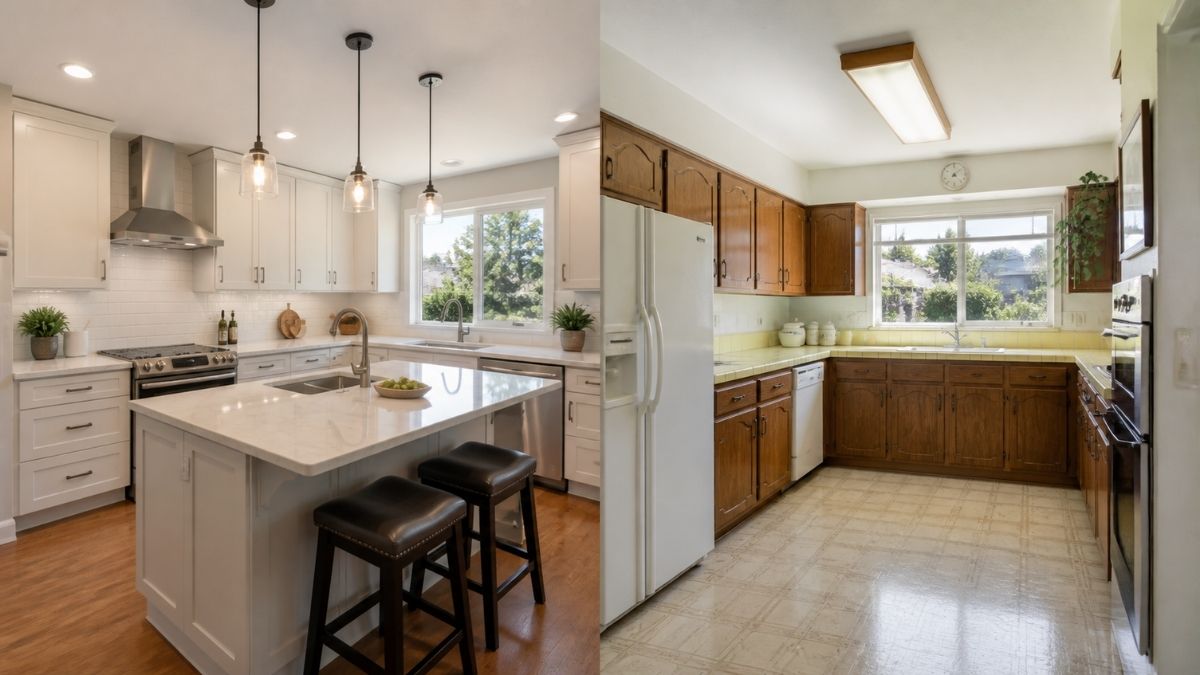
An updated home and a property needing work can appeal to buyers for very different reasons.
The move-in-ready home offers convenience. The kitchen is finished, the flooring feels current and the buyer can imagine settling in without immediately managing contractors.
The less-updated home may offer a lower entry price, more opportunity for personalization or a chance to purchase in a neighborhood that would otherwise be out of reach.
Neither choice is automatically better.
The right decision depends on the actual condition of the property, the buyer’s available cash, financing, schedule and tolerance for disruption. It also depends on whether the home needs cosmetic changes or major work involving essential systems.
Before choosing between move-in ready and fixer, East Bay buyers should understand the complete commitment behind each option.
Move-in ready is primarily a marketing description. Buyers should still investigate the home’s condition.
A property may have attractive paint, flooring and countertops while retaining an older roof, furnace, sewer lateral or electrical system. Another home may look less fashionable but have recently replaced many of its major components.
Visual presentation and underlying condition are different.
When viewing an updated property, ask what work was completed, when it was completed and whether permits were required. Review seller disclosures, inspection reports and available documentation rather than assuming that new finishes mean the entire home has been modernized.
A truly lower-maintenance purchase is one where both the visible improvements and major systems support that conclusion.
Buyers sometimes reject homes because the kitchen cabinets are older, the carpet is worn or the paint colors feel out of date.
Those features affect presentation, but they may not represent serious property problems.
A cosmetically dated home can be very different from one with foundation movement, extensive drainage issues, significant wood damage or multiple failing systems. The first may allow improvements to be completed gradually. The second may require substantial capital and professional coordination soon after closing.
Separate the work into categories:
Cosmetic preferences
Routine maintenance
Aging systems
Necessary repairs
Safety concerns
Structural or specialty issues
This helps prevent a dated but functional home from being mistaken for a major renovation project. It also prevents serious work from being minimized as “just a fixer.”
The lower-priced property is not necessarily the less-expensive choice.
Begin with the purchase price, then estimate the cost of immediate repairs, desired improvements, temporary housing, permits, design services and a contingency for unexpected conditions.
Renovation estimates can change once work begins. Opening a wall may reveal outdated wiring, plumbing issues or prior work that must be corrected. Material choices may also push a project beyond the original allowance.
Move-in-ready homes often command a premium because the work has already been completed. Buyers should compare that premium with the likely cost and inconvenience of completing similar improvements themselves.
The comparison might look like this:
Move-in-ready home: Higher price, less immediate work and greater certainty about the initial living experience.
Less-updated home: Lower price, additional renovation costs, more control over the finished result and greater exposure to construction uncertainty.
The important number is not simply what you pay at closing. It is what the home is likely to cost by the time it meets your needs.

A buyer may qualify for the purchase but have limited cash remaining for improvements.
Down payment, closing costs, moving expenses and emergency reserves all compete for the same funds. If the home needs immediate work, determine how that work will be paid for before writing the offer.
Do not assume that a future refinance, home-equity loan or increase in value will provide the necessary funds. Those options depend on circumstances that may change.
Some buyers may explore renovation-oriented financing. These programs have specific requirements, costs and approval processes, and not every borrower, property or project will qualify. Discuss the options with a knowledgeable lender before relying on them.
A renovation plan should be supported by accessible funds and realistic financing—not just the expectation that the money will become available later.
The financial calculation is only part of the decision.
Renovation affects daily life. Kitchens and bathrooms may be partially unavailable. Dust, noise, deliveries and scheduling changes can continue longer than expected. Buyers working from home, caring for children or managing demanding schedules may find the disruption especially difficult.
Consider whether the property will be safely habitable during the work. If not, include temporary housing and storage in the budget.
Also think about your personal response to unfinished projects. Some buyers enjoy making design decisions and seeing a home evolve. Others find the uncertainty exhausting.
Be honest about which experience fits you.
Managing a renovation requires decisions, communication and follow-through.
Even with a general contractor, the owner may need to review proposals, select materials, approve changes and respond when unexpected conditions arise. Smaller projects can require coordinating several independent trades.
If your schedule is already full, the time required may outweigh the financial benefit of purchasing a less-updated home.
Move-in-ready homes offer value partly because they transfer much of that burden to the prior owner. Fixers offer opportunity partly because the next owner agrees to assume it.
Neither arrangement is free. The cost simply appears in different forms.
A buyer may walk into a dated home and immediately imagine removing walls, relocating a kitchen or adding living space.
Those ideas should remain preliminary until the property has been properly evaluated.
Wall removal may involve structural engineering. An addition may be affected by setbacks, lot coverage, utilities or other requirements. Older properties may contain materials requiring specialized handling. Electrical, plumbing and mechanical capacity can also limit the apparent simplicity of a project.
Review the seller’s disclosures and available permits. Obtain appropriate inspections and consult licensed professionals when a proposed improvement is important to the buying decision.
The fact that a renovation appears possible does not establish its scope, approval requirements or cost.
Renovation decisions should be evaluated within the context of the neighborhood.
A well-designed improvement can increase utility and marketability, but buyers should be cautious about creating a cost basis far above nearby homes without understanding the tradeoff.
This does not mean every renovation must produce an immediate financial return. Owners may reasonably spend money on features they intend to enjoy for many years.
The key is knowing whether the project is primarily:
Necessary property work
A value-oriented improvement
A lifestyle improvement
A personal design choice
The same project can serve more than one purpose, but it should not automatically be treated as a guaranteed investment return.
Move-in-ready homes often attract buyers who prioritize convenience and predictability. Strong presentation can create immediate emotional appeal and, under the right conditions, greater competition.
Dated homes may receive less attention from buyers who do not want projects. That can create an opportunity—but only when the price and condition justify the work.
A property needing substantial repairs may also face financing or appraisal limitations that reduce the number of eligible buyers. That does not automatically make it a bargain. It means the purchase requires more careful planning.
Ask whether the discount is sufficient for the risk, cost and effort you are taking on.
Before buying a property that needs work, create three separate budgets.
The essential budget covers repairs required for safety, function and protection of the property.
The improvement budget covers projects that improve usability, condition or marketability.
The preference budget covers personal design choices that are desirable but not necessary.
This structure helps prevent cosmetic ideas from consuming funds needed for the roof, drainage, plumbing or other essential systems.
Add a contingency appropriate to the scope and uncertainty of the work. Larger or less-defined projects generally require more room for surprises.
The move-in-ready home may require compromising on purchase price, location or lot size. The fixer may require compromising on convenience, certainty and available cash.
The best choice is the compromise that aligns with your financial position and daily life.
A buyer with renovation experience, strong reserves and a flexible schedule may see opportunity in a dated home. A buyer managing a demanding move, limited cash after closing or little interest in construction may be better served by a home requiring less immediate work.
Do not choose the project because the finished version looks exciting. Choose it because the path from current condition to finished home is realistic.
If you are comparing updated and less-updated East Bay properties, I can help you evaluate the real estate considerations, comparable homes and property characteristics involved. Contractors, inspectors, lenders and other qualified professionals should address the technical and financial details within their expertise.

Real estate is personal. It’s not just about finding a house or selling a property. It’s about how people live, what matters most and where they want to go next. I’m Mike White, a Lifestyle Real....
Buying near East Bay open space can provide beautiful views and trail access, but the property deserves additional investigation before you make an offer.Homes near ridgelines, regional parks,,
Early fall can create a useful East Bay real estate window for buyers and sellers who understand how September changes the market.The first week of September does not suddenly transform East Bay
East Bay homeowners can reduce wildfire vulnerability by combining defensible space, home hardening, and planning ahead.Late summer is a practical time to look at the property as a system.,
East Bay sellers can protect their time and equity by repairing the correct problems before the home reaches the market.Preparing a home for sale does not mean fixing everything. The better goal is
 Last updated: September 22, 2026 11:27 PM UTC Property Information © 2026 MLSListings Inc. All rights reserved. Listing information is deemed reliable but not guaranteed. The data relating to real estate for sale on this display comes in part from the Internet Data Exchange program of the MLSListingsTM MLS system. Real estate listings held by brokerage firms other than REMAX Accord are marked with the Internet Data Exchange and detailed information about
them includes the names of the listing brokers and listing agents.
The information being provided by CARETS (CLAW, CRISNet MLS, DAMLS, CRMLS, i-Tech MLS, and/or VCRDS)
is for the visitor's personal, non-commercial use and may not be used for any purpose other than to identify
prospective properties visitor may be interested in purchasing.
Any information relating to a property referenced on this web site comes from the Internet Data Exchange (IDX)
program of CARETS. This web site may reference real estate listing(s) held by a brokerage firm other than the
broker and/or agent who owns this web site.
The accuracy of all information, regardless of source, including but not limited to square footages and lot sizes, is
deemed reliable but not guaranteed and should be personally verified through personal inspection by and/or with
the appropriate professionals. The data contained herein is copyrighted by CARETS, CLAW, CRISNet MLS,
DAMLS, CRMLS, i-Tech MLS and/or VCRDS and is protected by all applicable copyright laws. Any dissemination
of this information is in violation of copyright laws and is strictly prohibited.
CARETS, California Real Estate Technology Services, is a consolidated MLS property listing data feed comprised
of CLAW (Combined LA/Westside MLS), CRISNet MLS (Southland Regional AOR), DAMLS (Desert Area MLS),
CRMLS (California Regional MLS), i-Tech MLS (Glendale AOR/Pasadena Foothills AOR) and VCRDS (Ventura
County Regional Data Share)
Show More...
Last updated: September 22, 2026 11:27 PM UTC Property Information © 2026 MLSListings Inc. All rights reserved. Listing information is deemed reliable but not guaranteed. The data relating to real estate for sale on this display comes in part from the Internet Data Exchange program of the MLSListingsTM MLS system. Real estate listings held by brokerage firms other than REMAX Accord are marked with the Internet Data Exchange and detailed information about
them includes the names of the listing brokers and listing agents.
The information being provided by CARETS (CLAW, CRISNet MLS, DAMLS, CRMLS, i-Tech MLS, and/or VCRDS)
is for the visitor's personal, non-commercial use and may not be used for any purpose other than to identify
prospective properties visitor may be interested in purchasing.
Any information relating to a property referenced on this web site comes from the Internet Data Exchange (IDX)
program of CARETS. This web site may reference real estate listing(s) held by a brokerage firm other than the
broker and/or agent who owns this web site.
The accuracy of all information, regardless of source, including but not limited to square footages and lot sizes, is
deemed reliable but not guaranteed and should be personally verified through personal inspection by and/or with
the appropriate professionals. The data contained herein is copyrighted by CARETS, CLAW, CRISNet MLS,
DAMLS, CRMLS, i-Tech MLS and/or VCRDS and is protected by all applicable copyright laws. Any dissemination
of this information is in violation of copyright laws and is strictly prohibited.
CARETS, California Real Estate Technology Services, is a consolidated MLS property listing data feed comprised
of CLAW (Combined LA/Westside MLS), CRISNet MLS (Southland Regional AOR), DAMLS (Desert Area MLS),
CRMLS (California Regional MLS), i-Tech MLS (Glendale AOR/Pasadena Foothills AOR) and VCRDS (Ventura
County Regional Data Share)
Show More...
 All measurements and all calculations of area are approximate. Information provided by Seller/Other sources, not verified by Broker. All interested persons should independently verify accuracy of information. Provided properties may or may not be listed by the office/agent presenting the information. Data maintained by MetroList© may not reflect all real estate activity in the market.
All real estate content on this site is subject to the Federal Fair Housing Act of 1968, as amended, which makes it illegal to advertise any preference, limitation or discrimination because of race, color, religion, sex, handicap, family status or national origin or an intention to make any such preference, limitation or discrimination.
MetroList CA data last updated: September 22, 2026 11:07 PM UTC Terms of Use.
Vendor data provided by Inside Real Estate, LLC.
All measurements and all calculations of area are approximate. Information provided by Seller/Other sources, not verified by Broker. All interested persons should independently verify accuracy of information. Provided properties may or may not be listed by the office/agent presenting the information. Data maintained by MetroList© may not reflect all real estate activity in the market.
All real estate content on this site is subject to the Federal Fair Housing Act of 1968, as amended, which makes it illegal to advertise any preference, limitation or discrimination because of race, color, religion, sex, handicap, family status or national origin or an intention to make any such preference, limitation or discrimination.
MetroList CA data last updated: September 22, 2026 11:07 PM UTC Terms of Use.
Vendor data provided by Inside Real Estate, LLC.
 Bay East ©2026. CCAR ©2026. bridgeMLS ©2026. Information Deemed Reliable But Not Guaranteed. This information is being provided by the Bay East MLS, or CCAR MLS, or bridgeMLS. The listings presented here may or may not be listed by the Broker/Agent operating this website. This information is intended for the personal use of consumers and may not be used for any purpose other than to identify prospective properties consumers may be interested in purchasing. Data last updated at September
22, 2026 11:10 PM UTC
Show More...
Bay East ©2026. CCAR ©2026. bridgeMLS ©2026. Information Deemed Reliable But Not Guaranteed. This information is being provided by the Bay East MLS, or CCAR MLS, or bridgeMLS. The listings presented here may or may not be listed by the Broker/Agent operating this website. This information is intended for the personal use of consumers and may not be used for any purpose other than to identify prospective properties consumers may be interested in purchasing. Data last updated at September
22, 2026 11:10 PM UTC
Show More...
 This information, including square footage, while not guaranteed, has been acquired from sources believed to be reliable. Listings on this page identified as belonging to another listing firm are based upon data obtained from the SFAR MLS, which data is copyrighted by the San Francisco Association of REALTORS©, but is not warranted.
