Buying near East Bay open space can provide beautiful views and trail access, but the property deserves additional investigation before you make an offer.Homes near ridgelines, regional parks,,

Dated: July 24 2026
Views: 22
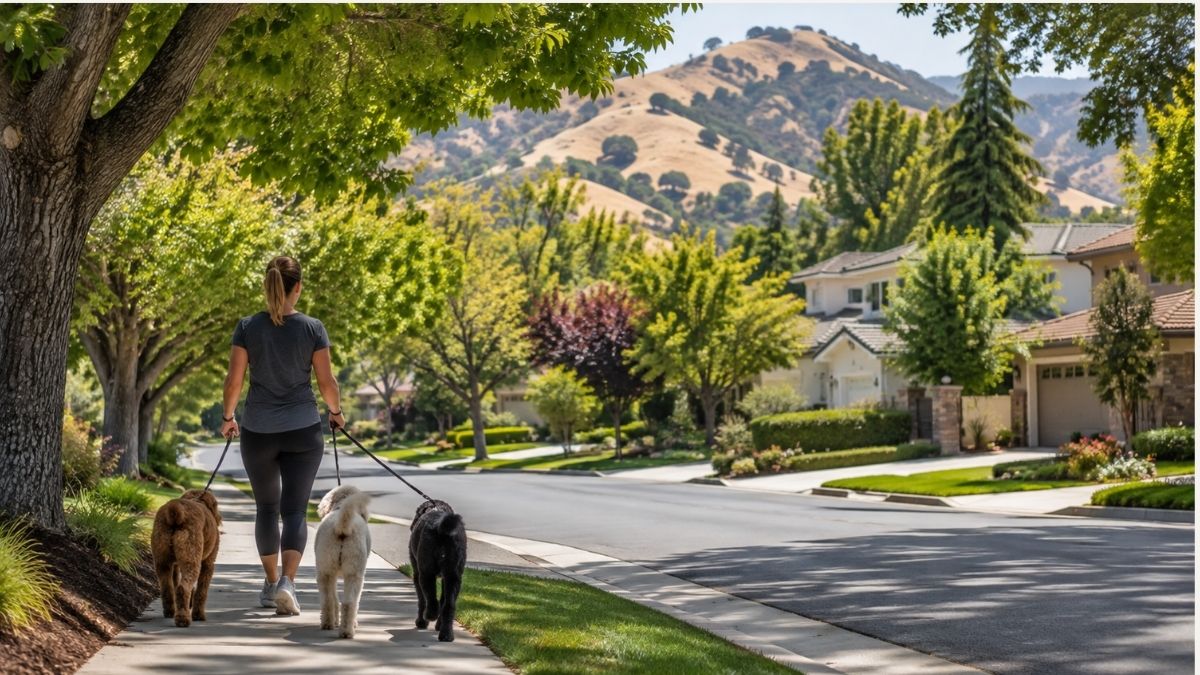
A beautiful backyard can sell a house. But if you share your home with dogs, you quickly learn that a beautiful backyard and a dog-friendly backyard are not necessarily the same thing.
The same goes for the house.
As a four-time dog dad, I notice things when touring homes that might never make the property description: Where will the dogs go first thing in the morning? Is the fencing actually secure? Will that gorgeous new flooring survive wet paws? Is there shade in the afternoon? Can you walk comfortably from the neighborhood or are you loading everyone into the car every time somebody needs exercise?
For buyers with pets, these aren’t minor details. They affect how you live in the home every single day.
The good news is that the East Bay offers an enormous variety of housing, lot sizes, neighborhoods and access to outdoor recreation. Finding the right home means looking beyond the number of bedrooms and evaluating whether the property works for every member of your household, including the ones with four legs.
Buyers understandably gravitate toward homes with large yards when they have dogs.
But I’d argue that the surrounding neighborhood can matter just as much.
Imagine two homes.
One has an enormous backyard but sits on a busy street without sidewalks.
The other has a smaller yard but connects to quiet residential streets, walking paths and nearby open space.
Depending on your dogs and lifestyle, the second property could be considerably more dog-friendly.
When touring East Bay neighborhoods, look at the environment around the property.
Are there sidewalks? How much traffic passes the house? Are there nearby walking trails? Are streets well-lit for evening walks? Are there parks or open spaces nearby?
In communities like Danville, San Ramon, Walnut Creek, Pleasanton and Dublin, these characteristics can change dramatically from one neighborhood to another.
Never assume a fenced backyard means a secure backyard.
Walk the perimeter.
Look for gaps underneath fences, deteriorated boards, loose gates and places where landscaping creates an unintended escape route.
Pay particular attention when properties back to:
Also consider your particular dog.
A fence that works perfectly well for a 12-pound senior dog may be completely inadequate for a young 70-pound athlete who has recently discovered that squirrels exist.
Fence replacement isn’t necessarily a reason to reject an otherwise great property. It is simply something to identify before purchasing so you can account for the cost and make improvements before moving in.
Buyers often tell me they need “a huge backyard for the dogs.”
Sometimes they do.
But usability matters more than raw square footage.
A large hillside lot may provide impressive acreage while offering very little flat usable space. Conversely, a smaller level backyard can provide plenty of room for dogs to play.
Look for:
California summers make shade particularly important.
A west-facing yard with little tree coverage can become extremely hot during the afternoon. Hardscape and artificial turf can also heat up considerably.
Think about how the yard will function in July, not just how good it looks during an open house in March.
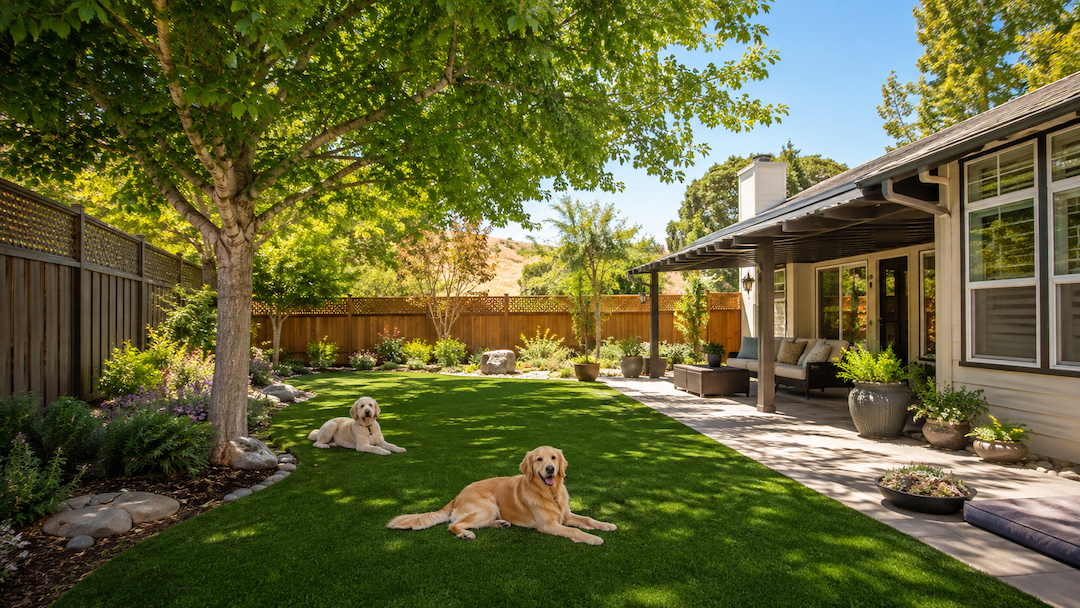
Some of the most beautiful landscaping isn’t necessarily appropriate for pets.
Before purchasing, identify the major plants around areas your dogs can access and research whether they are pet-safe.
The ASPCA maintains a searchable database of plants that may be toxic or non-toxic to dogs, cats and horses. If you’re uncertain about an existing plant, veterinarian guidance is appropriate before assuming it is safe.
Also look beyond plants.
Mulch, fertilizers, pesticides, mushrooms, sharp landscape edging and poorly secured garden products can all deserve attention when preparing a yard for pets.
You don’t necessarily need to remove a professionally landscaped garden.
You may simply need to modify which areas your dogs can access.
Now we go inside.
If you have dogs, flooring isn’t just a design decision.
It’s infrastructure.
Durability, traction and ease of cleaning become important, particularly around exterior doors.
Tile and many quality hard-surface flooring products can be excellent choices for dog households. Existing hardwood can also work beautifully but buyers should understand the finish and susceptibility to scratching.
Very slick floors deserve consideration too, particularly for older dogs.
And carpet?
Your dog will locate the only patch of brand-new white carpet in the entire house approximately seven seconds after coming inside with muddy feet.
Consider the flooring throughout the home’s highest-traffic areas rather than focusing exclusively on appearance.
A home’s layout can make pet ownership remarkably easy or surprisingly inconvenient.
One feature I love for dog households is direct backyard access from a common living area.
Other useful features include:
If you’re remodeling, a laundry room can even incorporate a dog-washing station.
None of these features are mandatory.
But collectively they can make everyday life much easier.

If you’re buying within a homeowners association, review the governing documents as part of your due diligence.
Pet-related rules may address issues such as the number or type of animals permitted and use of common areas. You should also investigate whether the HOA has restrictions affecting fencing or other improvements you might want for your pets.
Don’t rely on what another resident tells you at the pool.
Read the documents applicable to the property.
This is particularly important if you already know you’ll want to modify a fence, gate or exterior area after closing.
One of the great things about East Bay living is access to open space.
It’s also important to remember that we’re sharing it with wildlife.
Homes bordering hillsides, trails and undeveloped land may encounter coyotes and other wildlife.
That doesn’t make these properties undesirable for dog owners. In fact, they can offer fantastic access to recreation.
It simply means pet owners should consider fencing, supervision, nighttime routines and how easily wildlife can access the property.
A spectacular view is still spectacular.
You just want to understand what comes with it.
Dog-friendly doesn’t automatically mean single-family home.
A condo or townhome can work extremely well for the right owner and dog.
In fact, proximity to walking trails and parks may matter more than having a private yard.
When evaluating attached housing, consider:
A ground-floor condo next to a walking path can sometimes be more convenient for a dog owner than a larger home requiring a drive to reach good walking areas.
This is one of the most overlooked considerations.
The home that works for your dog today may need to work differently later.
Stairs are the obvious example.
A young dog may race up and down a staircase without a second thought. An older dog may eventually struggle with the same layout.
Consider whether the home offers:
You don’t need to design your entire purchase around hypothetical problems.
But if two homes are otherwise equal, accessibility can become a meaningful advantage.
You may not be the only buyer thinking this way.
A secure usable backyard, durable flooring, attractive fencing, nearby walking trails and thoughtful landscaping aren’t exclusively “dog features.”
They’re broadly desirable home features.
That means improvements made with your pets in mind can sometimes improve the home’s overall usability and appeal when it eventually returns to the market.
A giant artificial fire hydrant in the living room?
Maybe less universal.
When I’m helping dog owners evaluate a home, I’m looking at more than whether there’s enough room for a dog bed.
I’m thinking about the rhythm of daily life.
Where are you walking in the morning? How easily can the dogs get outside? Is the yard secure? What happens during an East Bay heat wave? Can you clean the floors without losing your mind? Will the property still work as your dogs get older?
The right home should make your life easier.
And if your dogs are part of the family, it should make theirs better too.
That doesn’t necessarily require an enormous lot or a house next to a dog park.
It requires finding the right combination of home, yard, neighborhood and lifestyle.
That’s a much better definition of a dog-friendly home.

Real estate is personal. It’s not just about finding a house or selling a property. It’s about how people live, what matters most and where they want to go next. I’m Mike White, a Lifestyle Real....
Buying near East Bay open space can provide beautiful views and trail access, but the property deserves additional investigation before you make an offer.Homes near ridgelines, regional parks,,
Early fall can create a useful East Bay real estate window for buyers and sellers who understand how September changes the market.The first week of September does not suddenly transform East Bay
East Bay homeowners can reduce wildfire vulnerability by combining defensible space, home hardening, and planning ahead.Late summer is a practical time to look at the property as a system.,
East Bay sellers can protect their time and equity by repairing the correct problems before the home reaches the market.Preparing a home for sale does not mean fixing everything. The better goal is
 Last updated: September 22, 2026 11:27 PM UTC Property Information © 2026 MLSListings Inc. All rights reserved. Listing information is deemed reliable but not guaranteed. The data relating to real estate for sale on this display comes in part from the Internet Data Exchange program of the MLSListingsTM MLS system. Real estate listings held by brokerage firms other than REMAX Accord are marked with the Internet Data Exchange and detailed information about
them includes the names of the listing brokers and listing agents.
The information being provided by CARETS (CLAW, CRISNet MLS, DAMLS, CRMLS, i-Tech MLS, and/or VCRDS)
is for the visitor's personal, non-commercial use and may not be used for any purpose other than to identify
prospective properties visitor may be interested in purchasing.
Any information relating to a property referenced on this web site comes from the Internet Data Exchange (IDX)
program of CARETS. This web site may reference real estate listing(s) held by a brokerage firm other than the
broker and/or agent who owns this web site.
The accuracy of all information, regardless of source, including but not limited to square footages and lot sizes, is
deemed reliable but not guaranteed and should be personally verified through personal inspection by and/or with
the appropriate professionals. The data contained herein is copyrighted by CARETS, CLAW, CRISNet MLS,
DAMLS, CRMLS, i-Tech MLS and/or VCRDS and is protected by all applicable copyright laws. Any dissemination
of this information is in violation of copyright laws and is strictly prohibited.
CARETS, California Real Estate Technology Services, is a consolidated MLS property listing data feed comprised
of CLAW (Combined LA/Westside MLS), CRISNet MLS (Southland Regional AOR), DAMLS (Desert Area MLS),
CRMLS (California Regional MLS), i-Tech MLS (Glendale AOR/Pasadena Foothills AOR) and VCRDS (Ventura
County Regional Data Share)
Show More...
Last updated: September 22, 2026 11:27 PM UTC Property Information © 2026 MLSListings Inc. All rights reserved. Listing information is deemed reliable but not guaranteed. The data relating to real estate for sale on this display comes in part from the Internet Data Exchange program of the MLSListingsTM MLS system. Real estate listings held by brokerage firms other than REMAX Accord are marked with the Internet Data Exchange and detailed information about
them includes the names of the listing brokers and listing agents.
The information being provided by CARETS (CLAW, CRISNet MLS, DAMLS, CRMLS, i-Tech MLS, and/or VCRDS)
is for the visitor's personal, non-commercial use and may not be used for any purpose other than to identify
prospective properties visitor may be interested in purchasing.
Any information relating to a property referenced on this web site comes from the Internet Data Exchange (IDX)
program of CARETS. This web site may reference real estate listing(s) held by a brokerage firm other than the
broker and/or agent who owns this web site.
The accuracy of all information, regardless of source, including but not limited to square footages and lot sizes, is
deemed reliable but not guaranteed and should be personally verified through personal inspection by and/or with
the appropriate professionals. The data contained herein is copyrighted by CARETS, CLAW, CRISNet MLS,
DAMLS, CRMLS, i-Tech MLS and/or VCRDS and is protected by all applicable copyright laws. Any dissemination
of this information is in violation of copyright laws and is strictly prohibited.
CARETS, California Real Estate Technology Services, is a consolidated MLS property listing data feed comprised
of CLAW (Combined LA/Westside MLS), CRISNet MLS (Southland Regional AOR), DAMLS (Desert Area MLS),
CRMLS (California Regional MLS), i-Tech MLS (Glendale AOR/Pasadena Foothills AOR) and VCRDS (Ventura
County Regional Data Share)
Show More...
 All measurements and all calculations of area are approximate. Information provided by Seller/Other sources, not verified by Broker. All interested persons should independently verify accuracy of information. Provided properties may or may not be listed by the office/agent presenting the information. Data maintained by MetroList© may not reflect all real estate activity in the market.
All real estate content on this site is subject to the Federal Fair Housing Act of 1968, as amended, which makes it illegal to advertise any preference, limitation or discrimination because of race, color, religion, sex, handicap, family status or national origin or an intention to make any such preference, limitation or discrimination.
MetroList CA data last updated: September 22, 2026 11:07 PM UTC Terms of Use.
Vendor data provided by Inside Real Estate, LLC.
All measurements and all calculations of area are approximate. Information provided by Seller/Other sources, not verified by Broker. All interested persons should independently verify accuracy of information. Provided properties may or may not be listed by the office/agent presenting the information. Data maintained by MetroList© may not reflect all real estate activity in the market.
All real estate content on this site is subject to the Federal Fair Housing Act of 1968, as amended, which makes it illegal to advertise any preference, limitation or discrimination because of race, color, religion, sex, handicap, family status or national origin or an intention to make any such preference, limitation or discrimination.
MetroList CA data last updated: September 22, 2026 11:07 PM UTC Terms of Use.
Vendor data provided by Inside Real Estate, LLC.
 Bay East ©2026. CCAR ©2026. bridgeMLS ©2026. Information Deemed Reliable But Not Guaranteed. This information is being provided by the Bay East MLS, or CCAR MLS, or bridgeMLS. The listings presented here may or may not be listed by the Broker/Agent operating this website. This information is intended for the personal use of consumers and may not be used for any purpose other than to identify prospective properties consumers may be interested in purchasing. Data last updated at September
22, 2026 11:10 PM UTC
Show More...
Bay East ©2026. CCAR ©2026. bridgeMLS ©2026. Information Deemed Reliable But Not Guaranteed. This information is being provided by the Bay East MLS, or CCAR MLS, or bridgeMLS. The listings presented here may or may not be listed by the Broker/Agent operating this website. This information is intended for the personal use of consumers and may not be used for any purpose other than to identify prospective properties consumers may be interested in purchasing. Data last updated at September
22, 2026 11:10 PM UTC
Show More...
 This information, including square footage, while not guaranteed, has been acquired from sources believed to be reliable. Listings on this page identified as belonging to another listing firm are based upon data obtained from the SFAR MLS, which data is copyrighted by the San Francisco Association of REALTORS©, but is not warranted.
